
In demanding industrial environments where solid particles, slurry, or viscous fluids flow through pipelines, a stainless steel knife gate valve is the go-to solution. Designed to slice through thick media, these valves are especially effective in wastewater treatment, mining, pulp and paper, and chemical processing industries.
What makes the stainless steel knife gate valve exceptional is its corrosion resistance, long service life, and ability to maintain reliable sealing even in harsh, abrasive environments. Stainless steel, particularly 304 or 316 grades, offers excellent chemical compatibility and mechanical strength.
This valve’s sharp-edged gate cuts through solids, ensuring unobstructed flow or complete shut-off when required. With options for manual, pneumatic, or electric actuators, the stainless steel knife gate valve adapts to various operational demands while offering durability, safety, and efficiency.
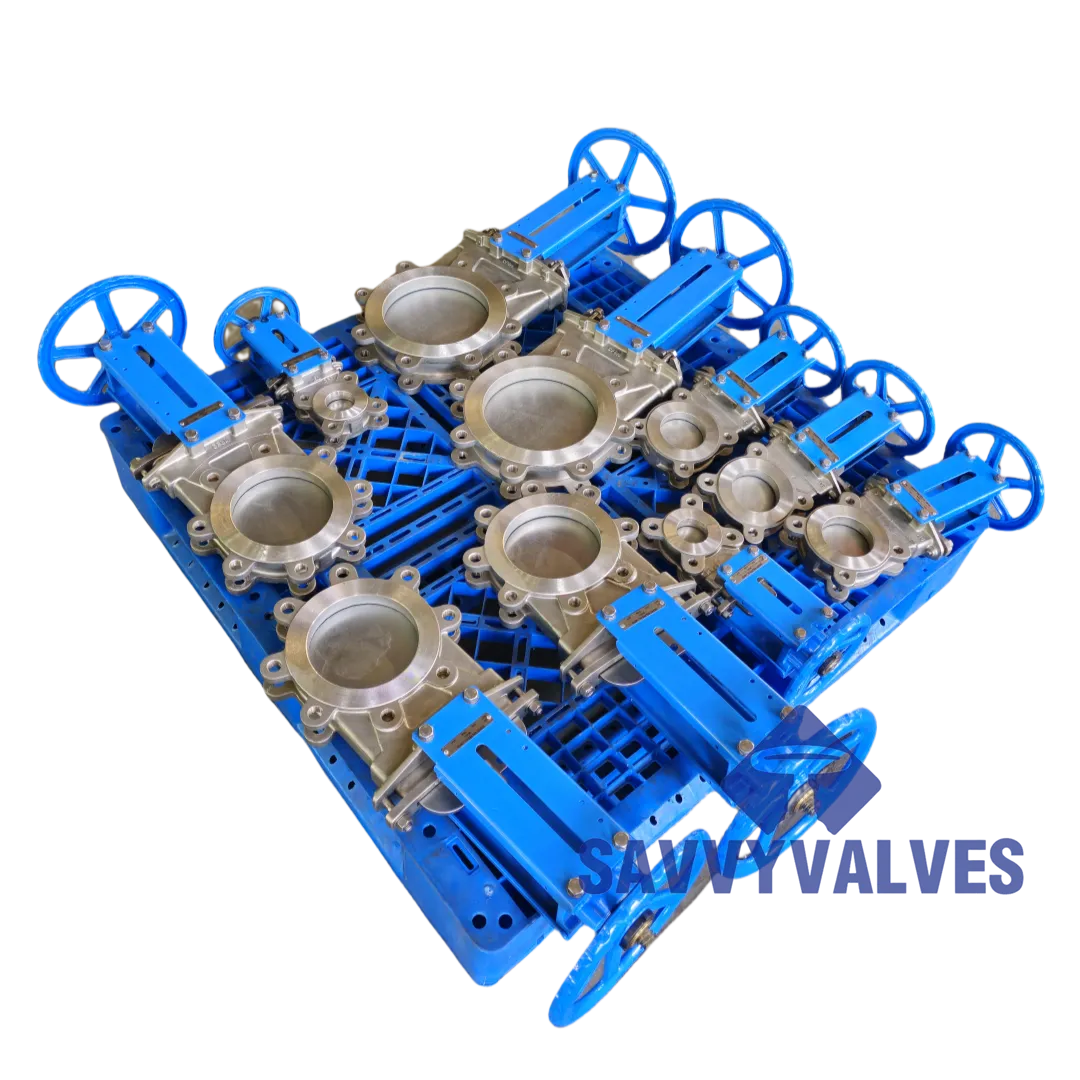
Choosing the Right Supplier: Trusted Knife Edge Gate Valve Manufacturers
Selecting a valve is just part of the solution—the reliability of your project also depends on choosing reputable knife edge gate valve manufacturers. Leading manufacturers prioritize engineering excellence, quality control, and industry certification to deliver consistent performance in demanding applications.
Top knife edge gate valve manufacturers invest in CNC precision machining, automated welding, and pressure testing facilities. Their valves meet standards such as API, ISO, MSS-SP, and CE certifications, ensuring compatibility with international industrial systems.
Whether you need a single 2" valve or dozens of 24" units for a mining operation, reliable knife edge gate valve manufacturers offer customized solutions, fast turnaround times, and global shipping. Some even provide technical drawings, on-site installation support, and post-purchase services—essential factors when choosing a long-term partner.
What Determines the Knife Gate Valve Price in Today’s Market?
If you're evaluating budget options, it's essential to understand what affects the knife gate valve price. The cost is influenced by several critical factors:
Material: Stainless steel models cost more than cast iron or carbon steel due to superior corrosion resistance and durability.
Size: Larger diameters require more material and complex machining, increasing the price.
Actuation type: Manual valves are cheaper, while electric or pneumatic actuated versions add automation and control features at a higher cost.
Sealing technology: Advanced seat and packing designs for high-pressure or zero-leakage applications raise the knife gate valve price.
Industry certification: Valves certified for specific uses (e.g., potable water, explosive environments) carry higher compliance costs.
Despite these factors, bulk ordering and working with established knife edge gate valve manufacturers often lead to discounts and reduced long-term maintenance costs. Always request a quote with technical details to ensure fair pricing and performance expectations.
Comparing the Common Types of Knife Gate Valves for Industrial Use
There are multiple types of knife gate valves, each tailored for specific flow media, pressure conditions, and mechanical requirements. Understanding these differences helps you select the most effective valve for your operation.
Lug type knife gate valve: This version is bolted between two pipeline flanges. It allows for easy disconnection and is suitable for dead-end service.
Wafer type knife gate valve: A more compact design that fits between flanges and is held in place by bolts. Common in general fluid applications.
Through-going gate valve: Designed for media with high solids content. The gate passes entirely through the body for full closure and minimal buildup.
Slurry knife gate valve: Tailored for extremely abrasive and thick fluids, often lined with rubber or urethane for enhanced wear resistance.
Bi-directional knife gate valve: Capable of sealing flow in both directions, used in systems where reverse pressure is expected.
Each of these types of knife gate valves has unique features related to flow control, sealing performance, and application suitability. Discussing your process conditions with manufacturers helps determine the ideal configuration.
Global Trends in Stainless Steel Knife Gate Valve Adoption
Around the world, industries are shifting toward the use of the stainless steel knife gate valve due to stricter environmental regulations and the need for more efficient waste and slurry management. These valves are now commonplace in regions with large infrastructure projects—Asia-Pacific, the Middle East, and North America leading the charge.
In water treatment plants, they ensure the clean separation of solid waste. In mining and metallurgy, they stand up to heavy slurry flows with exceptional abrasion resistance. Chemical and food processing industries trust the stainless steel knife gate valve for its ability to handle caustic materials while maintaining hygienic operation.
Technological advancements like smart actuation, automated diagnostics, and corrosion-resistant coatings have also expanded the use cases for stainless steel knife gate valve products. As manufacturers innovate, the global supply chain is adapting with more competitive pricing and customizable features.
knife gate valve FAQs
What is a stainless steel knife gate valve used for?
A stainless steel knife gate valve is primarily used to control the flow of media with suspended solids, such as slurry, sewage, or pulp. The stainless steel construction offers corrosion resistance and longevity in aggressive environments, making it ideal for wastewater treatment, mining, and food processing.
Who are the leading knife edge gate valve manufacturers?
Top knife edge gate valve manufacturers are based in countries like China, Germany, the United States, and India. Brands with global recognition typically offer ISO 9001 certification, export-ready products, and customization options for industrial systems. Look for companies with strong R&D, CAD support, and technical documentation.
How much does a knife gate valve cost on average?
The knife gate valve price varies by size, material, and actuation. A small manual valve (2"-4") in cast iron may cost $30–$100, while larger stainless steel models with pneumatic actuators can range from $500 to over $3000. Prices rise with special coatings, certifications, and technical complexity.
What are the most common types of knife gate valves?
The most common types of knife gate valves include wafer type, lug type, through-going, slurry, and bi-directional designs. Each is suited for a specific range of applications and installation conditions. The selection depends on factors such as fluid type, pressure class, and space constraints.
Can stainless steel knife gate valves be used in food-grade applications?
Yes, stainless steel knife gate valves, especially those made from 316-grade stainless steel and fitted with food-safe seals, can be used in hygienic or food-grade systems. They are easy to clean, resist corrosion, and comply with sanitary standards when manufactured accordingly.


 English
  Arabic
  Azerbaijani
  Czech
Czech  Dutch
Dutch  French
  German
  Indonesian
  Italian
  Japanese
  Korean
  Malay
Malay  Persian
  Polish
  Portuguese
  Russian
  Spanish
  Thai
Thai  Vietnamese