The propress swing check valve is designed for modern, fast installation in plumbing and heating systems using the Propress fitting system. Propress is a mechanical joining method that uses a specialized tool to crimp a fitting onto a pipe, creating a secure, leak-proof connection without soldering, threading, or gluing. A propress swing check valve integrates a standard swing check mechanism inside a body that has Propress-compatible ends. This allows plumbers and HVAC technicians to install a reliable check valve quickly and cleanly into copper, stainless steel, or PEX piping systems. The benefit of a propress swing check valve is speed and reliability: it eliminates the time and skill required for soldering, reduces fire risk on job sites, and provides a consistent, high-quality joint. It’s ideal for residential and commercial water supply, hydronic heating, and other systems where quick installation and a solder-free connection are priorities.
For Quieter Operation: The Cushioned Swing Check Valve
A standard swing check valve can slam shut when flow stops, causing water hammer—a loud bang and pressure surge that can damage pipes and fittings. A
cushioned swing check valve is specifically engineered to solve this problem. It features a built-in damping mechanism, often a spring or a hydraulic dashpot, that controls the closing speed of the disc. Instead of swinging shut violently, the disc closes gently just before reverse flow begins. The primary advantage of a
cushioned swing check valve is the significant reduction or elimination of water hammer noise and shock. This protects the entire piping system from stress, vibration, and potential damage.
Cushioned swing check valves are essential in applications where rapid pump shutdowns or frequent flow reversals are expected, such as in building water supply systems, industrial process lines, and irrigation booster pump stations. They provide all the backflow prevention of a standard check valve but with added protection for your pipeline’s longevity.
The Space-Saver: The Wafer Swing Check Valve
In tight pipe runs where space is limited, the
wafer swing check valve is the optimal choice. Unlike flanged check valves that have their own bolt holes and take up more space, a
wafer swing check valve is a thin, disc-like unit that installs directly between two pipe flanges. The existing flange bolts secure it in place. This design makes the
wafer swing check valve extremely compact and lightweight, significantly reducing the installation footprint and weight compared to flanged models. It is a popular choice in HVAC systems, water treatment plants, and industrial process piping where space between flanges is minimal. The internal mechanism is still a hinged disc that swings open with flow and closes with reverse flow. When selecting a
wafer swing check valve, ensure the pressure rating and disc material are suitable for your service, as its compact design is used across a wide range of pressures and media.
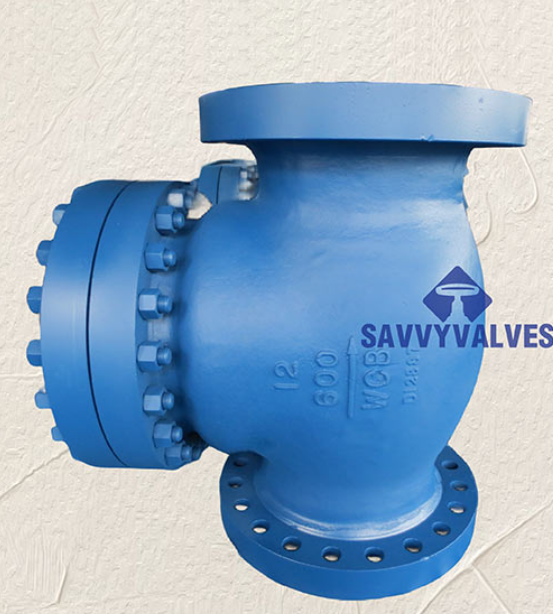
For Corrosive and Common Fluids: The Brass Swing Check Valve
The brass swing check valve is a versatile and widely used valve, particularly in plumbing, compressed air, fuel oil, and other non-aggressive service lines. Brass, an alloy of copper and zinc, offers excellent corrosion resistance to water and many chemicals, good machinability, and moderate strength. A brass swing check valve is typically used in smaller pipe sizes (from 1/4" to 4") and is available with threaded (NPT) or solder (sweat) connections. Its common applications include preventing backflow in residential water lines, on the discharge side of pumps, in compressor air lines, and in irrigation systems. The brass swing check valve is cost-effective, durable, and easy to install. When selecting a brass swing check valve, verify its pressure rating and ensure the seat material (often Buna-N or Viton) is compatible with your specific fluid, especially if it involves hot water or oils.
For Vertical or Upward Flow: The Weighted Swing Check Valve
A standard swing check valve requires gravity to help close the disc and relies on reverse flow to seal fully. In vertical lines with upward flow, gravity works against this action. A weighted swing check valve solves this problem. It incorporates an external lever and weight or an internal spring mechanism that adds a closing force to the disc. This extra force ensures positive, reliable closure even when the flow is moving vertically upward or when there is low backpressure. The weighted swing check valve is crucial in vertical pump discharge lines, boiler feed systems, and any pipeline where flow direction is upward. The adjustable weight allows fine-tuning of the closing force to match system conditions, preventing premature closing or reverse flow leakage. It provides a fail-safe mechanism to guarantee backflow prevention in challenging orientations where a standard swing check might flutter or fail to seal.
Selecting the correct swing check valve is vital for system protection and efficiency. We are a leading manufacturer of high-quality check valves, offering a complete range to meet every application need. Our product line includes easy-to-install propress swing check valves for modern plumbing, quiet cushioned swing check valves to eliminate water hammer, compact wafer swing check valves for space-constrained installations, durable brass swing check valves for general service, and reliable weighted swing check valves for vertical pipelines. We engineer our valves with precision-machined components, durable seat materials, and robust hinges to ensure bubble-tight sealing and long service life. Whether for municipal water, HVAC, industrial processing, or fire protection systems, our valves are designed to operate automatically and reliably, preventing backflow and protecting your valuable equipment.
Don't let backflow cause pump damage, contamination, or system failure. Protect your investment with the right swing check valve designed for your specific installation and flow conditions. Whether you need the fast-connect convenience of a propress swing check valve, the quiet operation of a cushioned swing check valve, the compact design of a wafer swing check valve, the corrosion resistance of a brass swing check valve, or the vertical-line assurance of a weighted swing check valve, we have the solution.
Visit our website to browse our comprehensive check valve catalog. Download specification sheets, CAD drawings, and installation guides. Use our product selection tool to filter by connection type, size, and material. Contact our engineering support team for expert advice. Describe your media, flow direction, pressure, and piping layout, and we'll recommend the perfect valve—from a cushioned swing check valve for a noisy pipeline to a weighted swing check valve for a vertical discharge. Request a quote or order a sample to test our quality.
Choose reliability. Prevent backflow. Ensure system integrity. Click to connect with us and find your ideal swing check valve solution.
Swing Check Valve FAQs
What is the main advantage of a propress swing check valve?
The main advantage of a propress swing check valve is its fast, reliable, and clean installation. It uses a crimp connection that requires no open flame (soldering), no threading, and no adhesives. This drastically reduces installation time, eliminates fire hazards, and ensures a consistent, leak-proof joint, making it ideal for modern copper, stainless steel, or PEX piping systems in tight spaces or retrofit projects.
When is a cushioned swing check valve necessary?
A cushioned swing check valve is necessary in systems prone to water hammer—the loud bang and pressure surge caused when a fast-moving fluid is suddenly stopped. This commonly occurs with quick-closing valves or pump shut-off. Installing a cushioned swing check valve with its dampened closing action prevents this shock, protecting pumps, pipes, fittings, and instruments from damage and reducing noise.
Can a wafer swing check valve be installed in any position?
While a wafer swing check valve is compact, its installation orientation is critical. It must be installed with the hinge pin horizontal so the disc swings vertically. It cannot be installed with the hinge pin vertical. Also, for proper operation, adequate straight pipe run before and after the valve is recommended. Always follow the manufacturer's installation instructions regarding orientation and clearances.
Is a brass swing check valve suitable for potable water?
Yes, a brass swing check valve is commonly used for potable (drinking) water applications. It is essential to ensure the valve is certified to relevant drinking water standards (such as NSF/ANSI 61 in the U.S.), which verifies that the materials (brass alloy and seat) do not leach harmful substances into the water. Always specify "lead-free" or "potable water" brass when ordering for drinking water systems.
How does the weight work on a weighted swing check valve?
On a weighted swing check valve, an external lever is attached to the disc's hinge pin. A weight is placed on this lever. The force of this weight adds to the closing force on the disc. This ensures the disc closes positively even against upward flow or low backpressure. The weight's position on the lever can often be adjusted to fine-tune the closing force for specific system conditions, ensuring reliable sealing.



 English
  Arabic
  Azerbaijani
  Czech
Czech  Dutch
Dutch  French
  German
  Indonesian
  Italian
  Japanese
  Korean
  Malay
Malay  Persian
  Polish
  Portuguese
  Russian
  Spanish
  Thai
Thai  Vietnamese