
In industrial automation systems, control valves, including control valve and hydraulic control valve, play a pivotal role in regulating fluid flow, pressure, and temperature. A positioner, as a critical accessory for these valves, significantly enhances their precision, reliability, and performance. SAVVY VALVES CO.,LTD., with decades of engineering expertise, integrates high-quality positioners into its comprehensive range ofcontrol valves solutions, delivering products that meet and exceed API, ASME, and ISO international standards. Serving key sectors such as oil & gas, petrochemicals, and power generation, Savvy Valves offers OEM manufacturing services and tailored solutions for wholesalers and their industrial clients. This article explores the core roles of a positioner on a control valve, covering precision control, stability enhancement, and operational optimization, to help wholesalers highlight the value of positioner-equipped control valves to their clients.
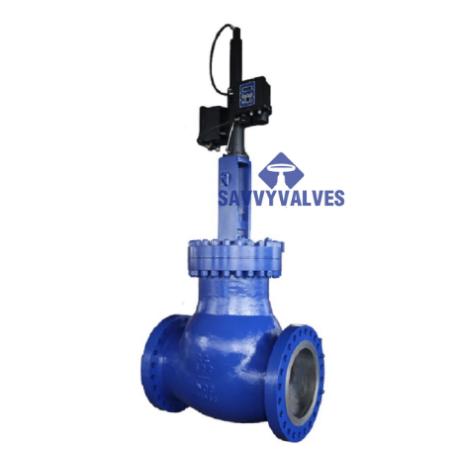
Precision Flow Control Role Of Positioner On Control Valve
- Accurate Valve Positioning: A positioner ensures that the control valve stem moves to the exact position dictated by the control signal. This precision is crucial for maintaining consistent flow rates in industrial processes, especially in applications where minor deviations can impact product quality or process efficiency. For hydraulic control valve, the positioner precisely regulates hydraulic pressure to control valve movement, eliminating positioning errors caused by friction or pressure fluctuations.
- Signal Amplification and Conversion: Industrial control signals (such as 4-20mA) are often weak and need amplification to drive large control valves. Positioners amplify these signals and convert them into mechanical or hydraulic forces, enabling smooth and accurate operation of even large-scale control valves. Savvy Valves’ positioners are engineered to ensure signal conversion accuracy, laying a solid foundation for precise flow control.
- Compensation for External Disturbances: Factors like fluid pressure, temperature changes, and mechanical wear can cause deviations in control valve Positioners continuously monitor the actual valve position and compare it with the set signal, making real-time adjustments to compensate for these disturbances. This active compensation function ensures that hydraulic control valve and other control valves maintain stable performance under varying operating conditions.
Stability Enhancement Role Of Positioner On Hydraulic Control Valve
|
Application Scenario |
Stability Enhancement Effect Of Positioner |
Operational Value |
Wholesale Guidance Value |
|
High-Pressure Oil & Gas Pipelines |
Stabilizes the opening degree of hydraulic control valve, preventing valve flutter caused by high-pressure fluid impact |
Avoids flow fluctuations and pipeline pressure surges, ensuring safe and stable operation of the transmission system |
Caters to the high-stability requirements of oil & gas clients, enhancing the competitiveness of wholesalers in this sector |
|
Petrochemical Reaction Processes |
Maintains consistent positioning of control valve during chemical reactions, reducing the impact of pressure and temperature changes on valve stability |
Ensures the accuracy of reaction conditions, improving product quality and reducing reaction failures |
Meets the strict process requirements of petrochemical clients, strengthening trust in product reliability |
|
Power Generation Steam Systems |
Enhances the stability of hydraulic control valve in high-temperature, high-pressure steam environments, preventing stem jamming or erratic movement |
Ensures stable steam supply, improving the efficiency and safety of power generation units |
Covers the specialized needs of power generation clients, expanding wholesalers’ target market scope |
Operational Optimization Role Of Positioner On Control Valves
- Remote Monitoring and Control: Positioners enable remote monitoring and control of control valves, allowing operators to adjust valve positions and monitor operating status from a centralized control room. This reduces the need for on-site manual operations, improving operational efficiency and reducing labor costs. Savvy Valves’ positioners are compatible with modern industrial automation systems, facilitating seamless integration into clients’ existing control networks.
- Diagnostic and Predictive Maintenance: Advanced positioners are equipped with diagnostic functions that monitor the performance of control valve components, such as stem wear, seal leakage, and actuator performance. By detecting potential issues early, positioners enable predictive maintenance, reducing unplanned downtime and maintenance costs. For hydraulic control valve, positioner diagnostics can also identify hydraulic system leaks or pressure anomalies, ensuring timely repairs.
- Energy Efficiency Improvement: By ensuring precise valve positioning, positioners help control valves operate at optimal efficiency, reducing energy waste. For example, in hydraulic control valve, the positioner regulates hydraulic pressure accurately, avoiding excessive energy consumption caused by over-pressurization. Wholesalers can emphasize this energy-saving advantage to clients seeking to lower operational costs.
Key Considerations For Selecting Positioners For Control Valves
Selecting the right positioner for control valves, including hydraulic control valve, is crucial for optimizing performance. First, match the positioner type to the valve’s actuation method (hydraulic, pneumatic, electric) to ensure compatibility. For hydraulic control valve, choose positioners specifically designed for hydraulic systems with pressure regulation capabilities. Second, consider the control signal type (4-20mA, HART, Profibus) to ensure seamless integration with the client’s automation system. Third, assess the operating environment (temperature, pressure, humidity, corrosion) and select positioners with appropriate protection ratings and material options. Savvy Valves’ team of engineering experts provides personalized selection guidance for wholesale partners, helping clients choose positioners that perfectly match their control valve applications. Additionally, wholesalers should emphasize the importance of selecting positioners that meet international standards, ensuring product reliability and compliance with industry requirements.
Control Valve FAQs
Why Is A Positioner Essential For Control Valve Operation
A positioner is essential because it enhances the precision, stability, and reliability of control valves. It ensures accurate valve positioning by compensating for external disturbances like pressure fluctuations and friction, maintains stable operation in harsh industrial environments, and enables remote monitoring and predictive maintenance. Without a positioner, control valves may suffer from positioning errors, unstable performance, and increased downtime, impacting overall process efficiency and safety.
What Are The Differences In Positioners For Hydraulic Control Valve And Pneumatic Control Valve
Positioners for hydraulic control valve are designed to work with hydraulic actuators, converting control signals into hydraulic pressure commands and featuring pressure compensation functions. Those for pneumatic control valves regulate air pressure to drive pneumatic actuators, with high air flow capacity for fast response. The key difference lies in the actuation medium compatibility and related performance optimizations—hydraulic positioners focus on pressure stability, while pneumatic ones prioritize air flow control.
How Does A Positioner Improve The Energy Efficiency Of Control Valves
Positioners improve energy efficiency by ensuring control valves operate at the exact position required by the process, avoiding unnecessary energy consumption. For hydraulic control valve, positioners precisely regulate hydraulic pressure, preventing over-pressurization and energy waste. For other control valves, they eliminate positioning errors that would cause the valve to operate in inefficient states, reducing overall energy usage while maintaining process performance.
Do Savvy Valves’ Control Valves Come With Compatible Positioners
Yes, Savvy Valves offers control valves, including hydraulic control valve, equipped with fully compatible, high-quality positioners. All positioners are engineered to match the performance characteristics of Savvy’s control valves and meet international standards such as API, ASME, and ISO. The company also provides customized positioner solutions for specific client requirements, ensuring optimal integration and performance.
What After Sales Support Is Offered For Positioners On Wholesale Control Valve Orders
For wholesale partners, Savvy Valves provides comprehensive after-sales support for positioners, including technical training on installation, calibration, and maintenance, on-site debugging assistance, timely supply of genuine positioner spare parts, and professional guidance on troubleshooting. Our engineering team is available to address any positioner-related operational issues, helping wholesalers enhance client satisfaction and maintain long-term cooperative relationships.


 English
  Arabic
  Azerbaijani
  Czech
Czech  Dutch
Dutch  French
  German
  Indonesian
  Italian
  Japanese
  Korean
  Malay
Malay  Persian
  Polish
  Portuguese
  Russian
  Spanish
  Thai
Thai  Vietnamese