
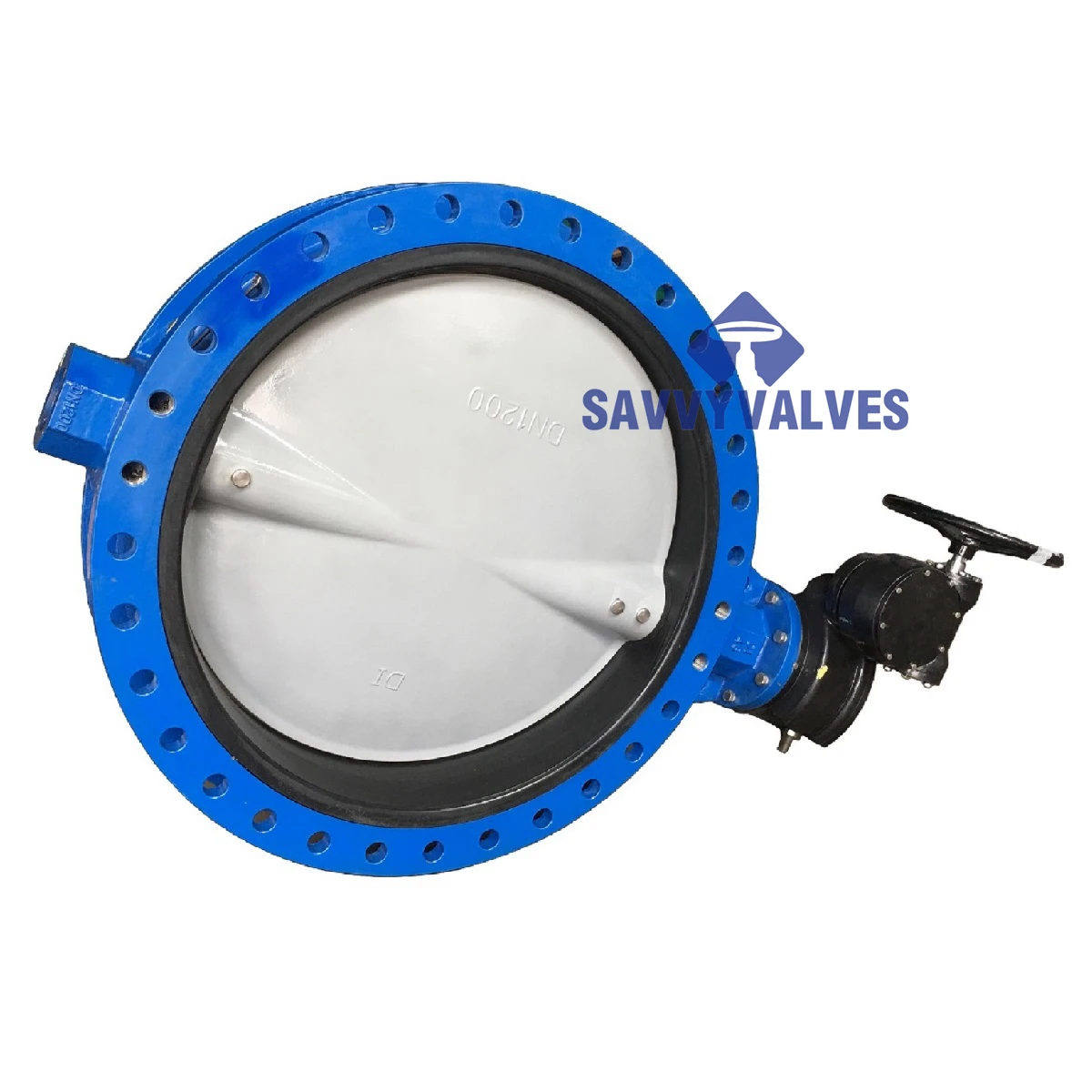
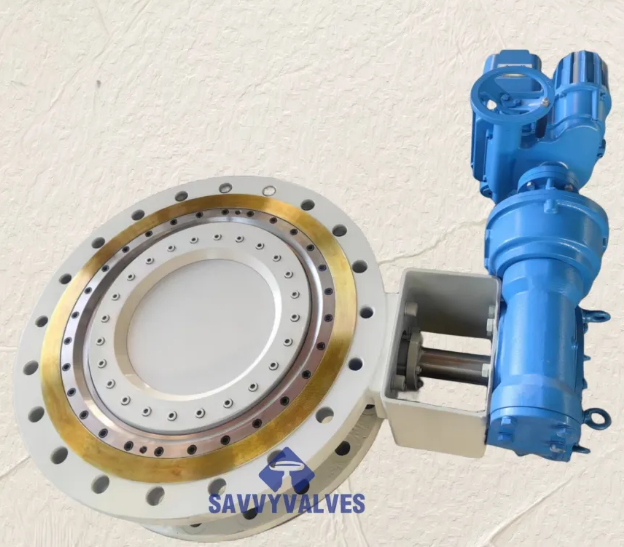
In industrial fluid control systems, double eccentric butterfly valve, double offset butterfly valves, and eccentric butterfly valve are widely used components, especially in fields related to fluid transportation for industries like chemical, water treatment, and energy. SAVVY VALVES CO.,LTD. is committed to producing high-quality eccentric butterfly valves, providing reliable solutions for fluid control needs.

Working Principle of Double Eccentric Butterfly Valve
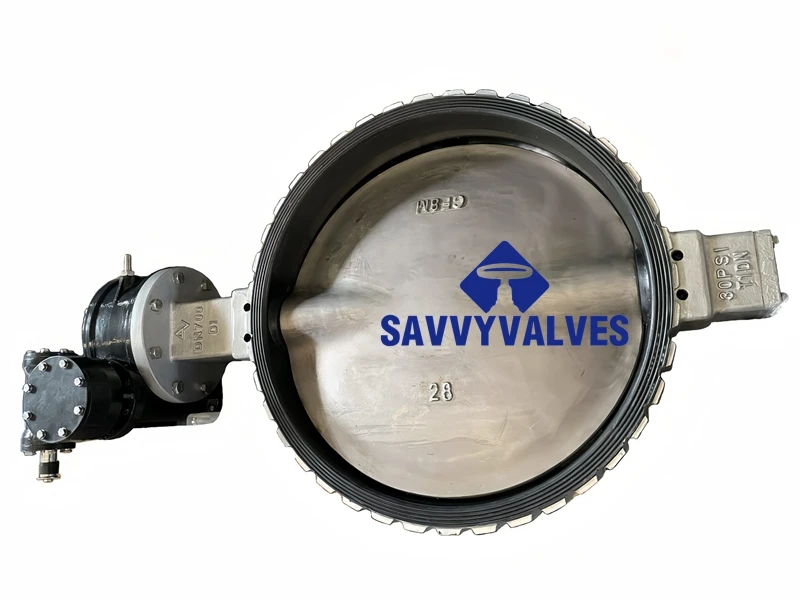
- The core design feature of a double eccentric butterfly valve lies in its two eccentric settings. The first eccentricity is that the axis of the valve stem is not coincident with the center of the valve disc, and the second eccentricity is that the axis of the valve stem is not in the same plane as the sealing surface of the valve body. This double eccentric structure fundamentally solves the problem of excessive friction between the valve disc and the sealing seat during the opening and closing process of traditional butterfly valves.
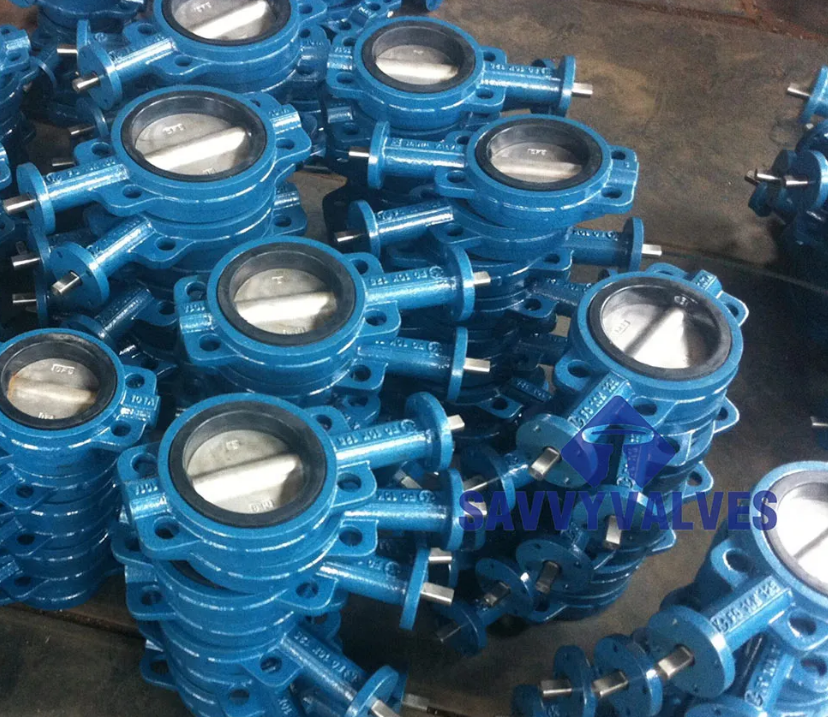
- When the double eccentric butterfly valve is in the closed state, the valve disc is tightly pressed against the EPDM seat under the action of the valve stem, forming a reliable seal to prevent fluid leakage. When opening the valve, as the valve stem rotates, the double eccentric design makes the valve disc first move away from the sealing seat in the radial direction, avoiding direct friction between the disc and the seat at the initial stage of opening. With the continuous rotation of the valve stem, the valve disc rotates around the stem axis, gradually opening the flow channel. During the closing process, the reverse movement occurs: the valve disc first rotates to the position close to the sealing seat, and then presses against the seat under the action of the stem to achieve sealing. This working principle not only reduces the wear of the sealing pair but also reduces the operating torque, making the valve easier to operate. SAVVY VALVES CO.,LTD. optimizes the eccentric parameters of its double eccentric butterfly valves through precise calculation and testing, ensuring smooth operation and long service life of the valves.
Structural Advantages of Double Offset Butterfly Valves
- Double offset butterfly valves inherit the double eccentric structure and have significant structural advantages. Firstly, the double offset design greatly reduces the friction between the valve disc and the sealing seat. Compared with traditional concentric butterfly valves, which have sliding friction between the disc and the seat during opening and closing, double offset butterfly valves mainly have rolling friction or minimal sliding friction, which significantly reduces the wear of the sealing seat and extends the service life of the valve. For example, in the chemical industry, where the fluid may contain corrosive media, the reduced wear of the sealing pair ensures that the valve can maintain good sealing performance for a long time, reducing maintenance frequency and costs.
- Secondly, the structural design of double offset butterfly valves allows for a larger flow coefficient. The streamlined design of the valve disc and the reasonable flow channel shape minimize fluid resistance when the valve is fully open, improving the fluid transportation efficiency. SAVVY VALVES CO.,LTD. uses high-quality ASTM A536 ductile iron (GGG50) for the disc of its double offset butterfly valves, which not only has high strength and toughness but also has good flow characteristics after precision machining. In addition, the valve body of double offset butterfly valves is usually designed with a compact structure, which occupies less space and is more convenient for installation and maintenance. This advantage is particularly obvious in pipeline systems with limited installation space, such as urban water supply and drainage pipelines.
Application Scenarios of Eccentric Butterfly Valve
- Eccentric butterfly valve, as a general term for butterfly valves with eccentric structures (including single eccentric, double eccentric, etc.), has a wide range of application scenarios. In the water treatment industry, eccentric butterfly valves are used to control the flow of raw water, treated water, and wastewater. The reliable sealing performance of the valve prevents the leakage of water, ensuring the normal operation of the water treatment process. For example, in large-scale water treatment plants, eccentric butterfly valves with large diameters (such as DN1200 produced by SAVVY VALVES CO.,LTD.) are used in the main water pipelines to control the overall water supply and drainage volume.
- In the energy industry, eccentric butterfly valves are used in thermal power plants, hydropower plants, and other facilities. In thermal power plants, they are used to control the flow of cooling water, condensate water, and other media. The high-temperature resistance and pressure resistance of the valve (such as the PN16 rating of SAVVY VALVES CO.,LTD.'s products) ensure that it can work stably in harsh working conditions. In the chemical industry, eccentric butterfly valves are suitable for controlling various chemical media, such as acids, alkalis, and organic solvents. The EPDM seat used in many eccentric butterfly valves has good chemical resistance, which can resist the corrosion of most chemical media, ensuring the safety and reliability of the chemical production process.
Double Eccentric Butterfly Valve FAQS
What is the difference between a double eccentric butterfly valve and a single eccentric butterfly valve?
The main difference lies in the number of eccentricities and their working characteristics. A double eccentric butterfly valve has two eccentric settings: the stem axis is not coincident with the disc center and not in the same plane as the valve body sealing surface. This design makes the disc move away from the seat first when opening, reducing friction. A single eccentric butterfly valve only has one eccentricity (stem axis not coincident with the disc center). During opening and closing, there is still a certain degree of sliding friction between the disc and the seat, resulting in relatively larger wear and operating torque compared to the double eccentric butterfly valve. SAVVY VALVES CO.,LTD. usually recommends double eccentric butterfly valves for customers with high requirements for valve service life and operation convenience.
Can double offset butterfly valves be used in high-temperature working conditions?
Yes, but it depends on the material selection of the valve. Double offset butterfly valves produced by SAVVY VALVES CO.,LTD. can be used in certain high-temperature environments by choosing appropriate materials. For example, if the valve body and disc are made of high-temperature-resistant ductile iron or stainless steel, and the seat is made of high-temperature-resistant materials (replacing EPDM with materials like PTFE or metal), the valve can withstand temperatures up to 300-400°C. However, if the working temperature exceeds the limit of the selected materials, the sealing performance and structural stability of the valve may be affected. Therefore, when selecting double offset butterfly valves for high-temperature conditions, wholesalers should communicate with customers about the specific temperature range and recommend suitable material configurations.
How to maintain eccentric butterfly valve to extend its service life?
First, regular inspection is essential. Check the sealing performance of the valve regularly to see if there is fluid leakage. If leakage is found, check whether the seat is worn or damaged and replace it in time. Second, lubricate the valve stem and transmission parts regularly. Apply appropriate lubricating oil to reduce friction between moving parts and prevent jamming. For eccentric butterfly valves with gear unit actuation (like those from SAVVY VALVES CO.,LTD.), pay attention to the lubrication of the gear unit. Third, avoid using the valve beyond its rated parameters (such as exceeding the rated pressure PN16 or using it in media that the seat cannot resist). Fourth, when the valve is not used for a long time, keep it in a half-open or fully open state (avoid long-term full closure) to prevent the disc from sticking to the seat due to medium deposition.
What factors should be considered when selecting double eccentric butterfly valve for customers?
First, the working conditions of the valve, including the type of fluid (corrosive, viscous, etc.), working pressure (such as whether it matches PN16), working temperature, and flow rate requirements. These factors determine the material selection of the valve body, disc, and seat. Second, the pipeline parameters, such as the pipeline diameter (matching the valve size like DN1200) and connection method (flange connection, wafer connection, etc.). Third, the actuation method. According to the customer's operation needs, select manual, gear unit (like SAVVY VALVES CO.,LTD.'s products), electric, or pneumatic actuation. Fourth, the sealing requirements. For scenarios with strict sealing requirements (such as chemical media that are easy to leak), ensure that the valve has reliable sealing performance, and select appropriate seat materials. Fifth, the service life and maintenance requirements. For customers who require long service life and low maintenance costs, recommend double eccentric butterfly valves with optimized eccentric design and high-quality materials.
Why is EPDM commonly used as the seat material for double eccentric butterfly valve?
EPDM (Ethylene Propylene Diene Monomer) has many advantages that make it suitable as the seat material for double eccentric butterfly valve. First, it has excellent elasticity and sealing performance. EPDM can tightly fit with the valve disc under a certain pressure, forming a reliable seal to prevent fluid leakage. Second, it has good chemical resistance. EPDM is resistant to most acids, alkalis, salts, and organic solvents, making it suitable for various fluid media. Third, it has good weather resistance and aging resistance. Even in outdoor or long-term use environments, EPDM is not easy to age, harden, or crack, ensuring the long-term sealing performance of the valve. Fourth, it has a wide temperature range. EPDM can work normally in the temperature range of -40°C to 120°C, which meets the needs of most general industrial working conditions. SAVVY VALVES CO.,LTD. selects high-quality EPDM for the seats of its double eccentric butterfly valves to ensure the valve's sealing reliability and service life.



 English
  Arabic
  Azerbaijani
  Czech
Czech  Dutch
Dutch  French
  German
  Indonesian
  Italian
  Japanese
  Korean
  Malay
Malay  Persian
  Polish
  Portuguese
  Russian
  Spanish
  Thai
Thai  Vietnamese