
In industrial fluid systems—from oil & gas pipelines to water treatment plants—y type filter (and its variants like y type filter strainer and inline y strainer) play a critical role in protecting equipment by removing debris, sediments, and solid particles. The performance and lifespan of these filters depend entirely on the materials used in their construction, as they must withstand corrosive fluids, high pressures, and extreme temperatures. SAVVY VALVES CO.,LTD., leverages decades of engineering expertise and cutting-edge production to craft y type filter solutions with premium materials. Specializing in OEM manufacturing for sectors like petrochemicals, power generation, and water treatment, the company’s products meet API, ASME, EN, and ISO standards—ensuring wholesalers can supply clients with durable, reliable filters. This article explores the key materials used in inline y strainer and y type filter strainer construction, and why SAVVY VALVES’ material selections excel for wholesale clients seeking long-lasting, high-performance filtration solutions.
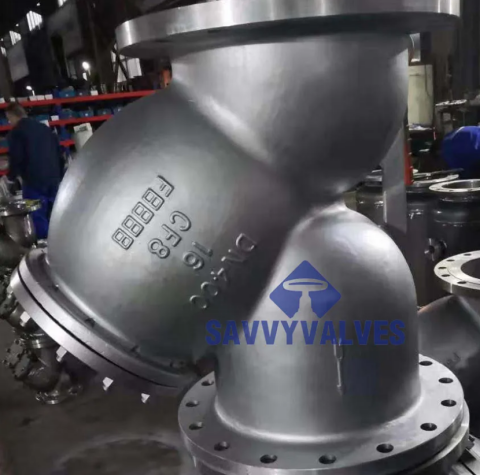
Stainless Steel: The Gold Standard for Y Type Filter Strainer
- Corrosion Resistance for Versatile Applications: Stainless steel is the most common material for y type filter strainer construction, and for good reason—it offers exceptional resistance to corrosion, making it suitable for both aqueous and chemical-based fluid systems. SAVVY VALVES primarily uses 316L stainless steel for y type filter bodies and screens, as it contains molybdenum (2-3%) that enhances resistance to chloride-induced corrosion (critical for marine, oilfield, or saltwater applications). Unlike carbon steel, 316L stainless steel won’t rust or degrade when exposed to harsh fluids like seawater, acidic solvents, or petrochemicals. For example, an inline y strainer made of 316L stainless steel can operate in offshore oil pipelines for 10+ years without material failure. SAVVY’s engineering team also polishes the stainless steel surfaces to a smooth finish, reducing particle buildup and simplifying cleaning—key benefits for wholesalers serving clients with high-maintenance standards. A wholesaler supplying North American petrochemical firms reported that SAVVY’s stainless steel y type filter strainer units had a 95% customer retention rate, as clients valued their resistance to chemical corrosion.
- Strength & Durability for High-Pressure Systems: Inline y strainer often operate in high-pressure environments (e.g., power generation steam lines, hydraulic systems), and stainless steel’s high tensile strength (316L has a minimum yield strength of 170 MPa) ensures the filter body can withstand pressures up to PN40 (or higher for custom designs). Unlike plastic filters that crack under pressure, stainless steel y type filter maintain structural integrity even in fluctuating pressure conditions. SAVVY VALVES also reinforces critical areas—like the filter’s “Y” junction and screen housing—with thicker stainless steel gauges (3-5mm) to prevent deformation. A wholesaler serving European power plants noted that SAVVY’s stainless steel inline y strainer units never failed during pressure surges, protecting expensive turbines and pumps from debris damage.
Product Specifications: Materials for Y Type Filter Variants
|
Product Category |
SAVVY VALVES Materials & Specifications |
Wholesale Value & Market Appeal |
Ideal Applications |
|
316L Stainless Steel Y Type Filter |
Body: 316L stainless steel; screen: 316L stainless steel (mesh size 20-200); pressure rating: PN10-PN40; temp range: -20°C to 200°C; API 602 compliant |
Corrosive fluids, offshore applications, chemical processing; durable; low maintenance |
Oil & gas pipelines, marine systems, petrochemical plants |
|
Carbon Steel Inline Y Strainer |
Body: Carbon steel (A105); screen: 304 stainless steel (mesh size 10-100); pressure rating: PN16-PN64; temp range: -30°C to 300°C; ASME B16.34 compliant |
High-pressure, non-corrosive systems, industrial pipelines; cost-effective; high strength |
Power generation steam lines, hydraulic systems, industrial water lines |
|
Hastelloy Y Type Filter Strainer |
Body: Hastelloy C276; screen: Hastelloy C276 (mesh size 50-200); pressure rating: PN10-PN25; temp range: -50°C to 400°C; ISO 10434 compliant |
Extreme corrosives, high-temperature fluids; ultra-resistant; long lifespan |
Acid processing plants, pharmaceutical manufacturing, high-temperature chemical lines |
Specialty Materials for Extreme-Condition Y Type Filter
- Hastelloy for Ultra-Corrosive Environments: For clients dealing with highly aggressive fluids—like concentrated acids (sulfuric, nitric) or harsh chemicals—SAVVY VALVES offers y type filter strainer made of Hastelloy C276. This nickel-molybdenum-chromium alloy resists even the most corrosive substances, including those that damage stainless steel. For example, a y type filter made of Hastelloy C276 can operate in a sulfuric acid processing plant for 15+ years without corrosion, unlike stainless steel filters that would degrade in 2-3 years. While Hastelloy is a premium material, its long lifespan reduces replacement costs—making it a cost-effective choice for niche, high-value applications. SAVVY’s sales team educates wholesalers on the total cost of ownership of Hastelloy filters, helping them justify the investment to clients. A wholesaler supplying Asian pharmaceutical firms reported that Hastelloy y type filter strainer units became their top-selling specialty product, as pharmaceutical clients required ultra-pure, corrosion-free filtration.
- Carbon Steel for Cost-Effective High-Pressure Use: For non-corrosive, high-pressure systems (e.g., industrial water pipelines, steam lines), carbon steel (A105 grade) is an excellent, budget-friendly material for inline y strainer Carbon steel offers high strength (yield strength ≥250 MPa) and can withstand temperatures up to 300°C—ideal for power generation or manufacturing facilities where cost is a priority. SAVVY VALVES coats carbon steel y type filterbodies with epoxy or zinc to prevent rust in mildy moist environments, extending their lifespan. For example, a carbon steel inline y strainer with zinc coating can operate in a factory’s cooling water line for 5-7 years at a fraction of the cost of stainless steel. A wholesaler serving North American manufacturing plants noted that carbon steel inline y strainer units were their best-selling entry-level product, as clients valued the balance of performance and affordability.
Wholesale Advantages of SAVVY VALVES’ Material-Choice Expertise
- Material-Matching for Client Needs: SAVVY VALVES’ engineering team doesn’t just use premium materials—they help wholesalers match the right material to each client’s specific application. For example, if a wholesaler’s client needs a y type filter for a saltwater pipeline, SAVVY recommends 316L stainless steel; for a sulfuric acid line, they suggest Hastelloy. This personalized guidance ensures clients get filters that perform optimally, reducing returns and increasing satisfaction. SAVVY’s team also provides material test reports (MTRs) for each shipment, verifying the quality of the material used—critical for clients in regulated industries (e.g., pharmaceuticals, oil & gas). A wholesaler supplying European chemical firms reported that SAVVY’s material-matching service helped them win 30% more contracts, as clients trusted the expertise behind the material selection.
- Scalable OEM Production for Bulk Orders: Whether wholesalers need 100+ stainless steel y type filter units for a water treatment project or a small batch of Hastelloy y type filter strainer for a pharmaceutical client, SAVVY’s scalable production capabilities can meet demand. The company’s OEM focus allows for flexible material options—wholesalers can request custom material thicknesses, coatings, or screen mesh sizes to match client specifications. SAVVY’s fast lead times (2-4 weeks for standard materials, 6-8 weeks for specialty alloys) ensure wholesalers can deliver filters to clients on schedule. A wholesaler supplying South American oilfields reported that SAVVY’s scalable production helped them fulfill a last-minute order for 500 inline y strainer units, avoiding costly delays for their client’s pipeline project.
Y Type Filter FAQS
Which Material Is Best for a Y Type Filter in Seawater Applications?
For seawater applications, 316L stainless steel is the best material for y type filter construction. Its molybdenum content resists chloride-induced corrosion (the main cause of rust in seawater), ensuring the filter lasts 10+ years. SAVVY VALVES also offers optional passivation treatments for 316L stainless steel y type filter units, which enhance corrosion resistance further. A wholesaler supplying offshore marine clients reported that 316L stainless steel y type filter units had zero corrosion issues in seawater, outperforming 304 stainless steel filters by 5+ years.
Can Inline Y Strainer Materials Be Customized for Specific Temperatures?
Absolutely—SAVVY VALVES customizes inline y strainer materials for specific temperature ranges. For low-temperature applications (e.g., cryogenic fluids down to -50°C), they use stainless steel 316LN (with nitrogen addition for toughness); for high-temperature applications (up to 400°C), they recommend Hastelloy C276 or alloy 825. SAVVY’s engineering team calculates the material’s thermal expansion and strength at the client’s operating temperature to ensure safety. A wholesaler supplying European cryogenic facilities noted that custom low-temperature inline y strainer units performed reliably in -40°C conditions, with no material brittleness.
How Does the Material of a Y Type Filter Strainer Affect Its Maintenance?
Material choice directly impacts maintenance frequency: 1) Stainless steel y type filter strainer units require minimal maintenance—only occasional cleaning of the screen, as they resist corrosion and particle buildup; 2) Carbon steel units need regular inspections for rust (even with coatings), requiring touch-up painting every 1-2 years; 3) Hastelloy units need almost no maintenance, as they resist corrosion and degradation. SAVVY provides maintenance guides tailored to each material, helping wholesalers advise clients. A wholesaler supplying North American factories reported that stainless steel y type filter strainer units had 70% less maintenance time than carbon steel ones.
Is Carbon Steel Inline Y Strainer Suitable for Food-Grade Applications?
Carbon steel inline y strainer is not recommended for direct food contact, as it can rust and contaminate food products. For food-grade applications, SAVVY VALVES offers inline y strainer made of 316L stainless steel with a food-safe polish (Ra ≤0.8μm), which meets FDA and EU 10/2011 standards. These filters are ideal for food processing or beverage manufacturing, where hygiene is critical. A wholesaler supplying European dairy plants reported that 316L food-grade inline y strainer units helped clients meet strict food safety regulations, with zero contamination incidents.
What Support Does SAVVY VALVES Provide for Wholesalers Regarding Y Type Filter Materials?
SAVVY VALVES offers three key support services for wholesalers: 1) Material expertise—engineers provide guidance on material selection based on client applications (e.g., fluid type, temperature, pressure), including cost-benefit analyses; 2) Documentation—MTRs, certification documents (FDA, API, ISO), and material safety data sheets (MSDS) for each filter; 3) Custom samples—small-batch material samples (e.g., 316L stainless steel, Hastelloy) for clients to test before bulk orders. Additionally, SAVVY provides training materials to help wholesalers explain material benefits to clients. A wholesaler supplying Asian water treatment firms reported that SAVVY’s material support helped them close 40% more deals, as clients trusted the transparency and expertise. To explore SAVVY VALVES’ y type filter, y type filter strainer, and inline y strainer products—including material options—visit our company webpage today!


 English
  Arabic
  Azerbaijani
  Czech
Czech  Dutch
Dutch  French
  German
  Indonesian
  Italian
  Japanese
  Korean
  Malay
Malay  Persian
  Polish
  Portuguese
  Russian
  Spanish
  Thai
Thai  Vietnamese