
In industrial systems—from pumps and compressors to pipelines and machinery—vibration is a persistent challenge that can cause equipment damage, noise pollution, and reduced operational lifespan. Rubber hose joint (and its variants like rubber flexible joint and rubber joint) act as critical 减振 (vibration-damping) components, absorbing and dissipating vibrational energy to protect connected equipment. SAVVY VALVES CO.,LTD., leverages decades of engineering expertise and cutting-edge production to craft high-performance rubber hose joint solutions. Serving sectors including oil & gas, power generation, and water treatment, the company’s products meet API, ASME, EN, and ISO standards—ensuring wholesalers can supply clients with reliable, durable 减振 components. This article explores the science behind how rubber flexible joint and rubber joint reduce vibration, and why SAVVY VALVES’ offerings excel for wholesale clients seeking to enhance system stability and equipment longevity.
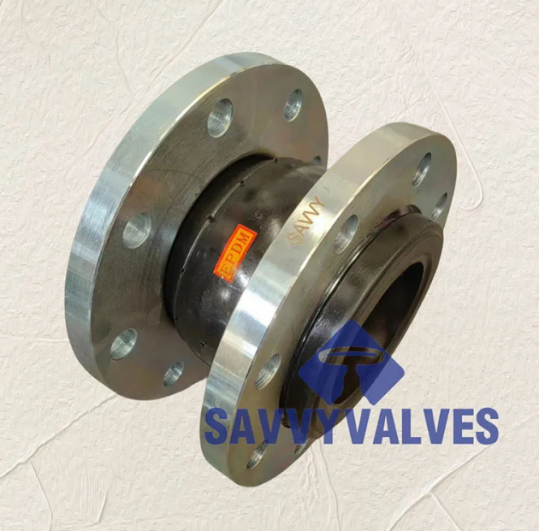
The Science of Vibration Reduction With Rubber Flexible Joint
- Elasticity of Rubber: The core reason rubber flexible joint reduces vibration lies in rubber’s inherent elasticity. Unlike rigid metal connectors that transfer vibration directly through the system, rubber’s molecular structure allows it to stretch, compress, and bend in response to vibrational forces. When vibration travels from a pump or motor to the rubber flexible joint, the rubber material deforms slightly—absorbing the energy rather than transmitting it to pipelines or other equipment. SAVVY VALVES uses high-quality synthetic rubber (e.g., EPDM, NBR, silicone) for its rubber joint products, as these materials offer superior elasticity and fatigue resistance. For example, an EPDM-based rubber hose joint can absorb up to 80% of vibrational energy from a water pump, reducing noise levels by 15-20 dB and preventing pipeline stress cracks. A wholesaler supplying North American water treatment plants reported that SAVVY’s rubber flexible joint units reduced equipment maintenance costs by 30%, as vibration-related damage to pumps and pipelines decreased significantly.
- Damping Properties of Rubber Compounds: Beyond elasticity, rubber compounds have excellent damping properties—meaning they convert vibrational energy into minimal heat, rather than reflecting it back into the system. SAVVY VALVES optimizes the rubber formulation for its rubber joint products by adding fillers (e.g., carbon black, clay) that enhance damping efficiency. This is critical for high-frequency vibrations (e.g., from industrial compressors), which rigid connectors often amplify. A rubber hose joint with enhanced damping can reduce high-frequency vibration transmission by 90%, protecting sensitive equipment like flow meters or pressure sensors. SAVVY’s engineering team tests each rubber compound for damping coefficient, ensuring consistent performance across batches. A wholesaler serving European petrochemical firms noted that SAVVY’s rubber joint units prevented vibration-induced failures of precision instruments, improving overall system reliability.
Product Specifications: Rubber Joint for Different Industrial Needs
|
Product Category |
SAVVY VALVES Specifications |
Wholesale Value & Market Appeal |
Ideal Applications |
|
EPDM Rubber Flexible Joint |
Material: EPDM rubber (resistant to water, steam, mild chemicals); pressure rating: PN10-PN25; temp range: -40°C to 120°C; vibration absorption rate: ≥75% |
Water treatment, HVAC, food processing; corrosion-resistant; low temperature tolerance |
Water pumps, HVAC systems, food-grade pipelines |
|
NBR Rubber Hose Joint |
Material: NBR rubber (oil-resistant); pressure rating: PN16-PN40; temp range: -20°C to 100°C; vibration absorption rate: ≥80% |
Oil & gas, automotive, hydraulic systems; oil-resistant; high pressure tolerance |
Fuel pipelines, hydraulic pumps, automotive manufacturing equipment |
|
Silicone Rubber Joint |
Material: Silicone rubber (high temp-resistant); pressure rating: PN6-PN16; temp range: -60°C to 200°C; vibration absorption rate: ≥70% |
Power generation, pharmaceutical, aerospace; high temp-resistant; sterile option available |
Steam turbines, pharmaceutical processing lines, high-temperature ducts |
Key Design Features Enhancing Vibration Reduction in Rubber Hose Joint
- Reinforced Structure for Stability: While rubber’s elasticity is key, rubber hose joint products need structural reinforcement to handle pressure without compromising vibration attenuation SAVVY VALVES adds layers of high-tensile fabric (e.g., polyester, nylon) or metal wire to the rubber matrix of its rubber flexible joint units. This reinforcement prevents excessive deformation under high pressure (e.g., in oil pipelines) while maintaining the rubber’s ability to absorb vibration. For example, a wire-reinforced rubber hose joint can with stand PN40 pressure while still reducing vibration by 75%, making it suitable for high-pressure hydraulic systems. A wholesaler supplying South American oilfields reported that SAVVY’s reinforced rubber joint units never failed under pressure, even in harsh offshore environments.
- Flange Design for Secure Connection: A secure connection between the rubber joint and equipment is essential for effective vibration reduction—loose connections can create additional noise and vibration. SAVVY VALVES uses precision-machined flanges (carbon steel or stainless steel) for its rubber hose joint products, with standardized bolt holes that align perfectly with industry-standard equipment. The flanges are bonded to the rubber using high-strength adhesives and mechanical crimping, ensuring a leak-tight, vibration-resistant connection. For clients with custom equipment, SAVVY offers tailored flange designs to match specific dimensions. A wholesaler serving Asian manufacturing plants noted that the secure flange connection of SAVVY’s rubber flexible joint units eliminated “loose-joint vibration,” further improving system stability.
Rubber Joint FAQS
Which Rubber Material Is Best for a Rubber Joint in High-Temperature Applications?
For high-temperature applications (e.g., steam lines, power generation), silicone rubber is the best choice for rubber joint products. SAVVY VALVES’ silicone rubber joint can withstand temperatures up to 200°C (or -60°C for low-temperature extremes) and maintains its elasticity and vibration absorption properties even under prolonged heat exposure. Unlike EPDM or NBR, silicone rubber doesn’t harden or degrade at high temperatures. A wholesaler supplying European power plants reported that silicone rubber flexible joint units lasted 5+ years in steam turbine systems, outperforming other rubber materials by 2-3 years.
Can a Rubber Hose Joint Handle High-Pressure Industrial Systems?
Yes—SAVVY VALVES’ rubber hose joint products are designed for high-pressure applications. Reinforced models (with polyester fabric or metal wire) can withstand pressures up to PN40, making them suitable for oil & gas pipelines, hydraulic systems, and high-pressure water treatment plants. The reinforcement prevents the rubber from bulging or bursting under pressure, while still allowing it to absorb vibration. SAVVY’s engineering team calculates the pressure rating for each rubber joint based on the application, ensuring safety and performance. A wholesaler supplying offshore oilfields noted that SAVVY’s high-pressure rubber hose joint units never leaked or failed, even in rough sea conditions.
How Long Does a Rubber Flexible Joint Last, and When Should It Be Replaced?
A well-maintained rubber flexible joint from SAVVY VALVES lasts 3-5 years in typical industrial applications, and up to 7 years in mild conditions (e.g., HVAC systems). Signs that replacement is needed include: 1) Hardening or cracking of the rubber (reduced elasticity); 2) Leaks around the flange connection; 3) Decreased vibration absorption (increased noise or equipment vibration). SAVVY provides a maintenance guide for wholesalers to share with clients, including inspection schedules. A wholesaler supplying North American manufacturing plants reported that clients who followed the guide replaced rubber joint units proactively, avoiding unexpected downtime.
Is a Rubber Joint Suitable for Chemical-Resistant Applications?
Yes—SAVVY VALVES offers rubber joint products made of chemical-resistant rubber compounds. For mild chemicals (e.g., water treatment chemicals), EPDM rubber is ideal; for oil-based chemicals or fuels, NBR rubber is recommended; for harsh acids or solvents, SAVVY provides specialty fluororubber (FKM) rubber flexible joint units. These materials resist chemical degradation, ensuring the rubber joint maintains its vibration absorption properties and structural integrity. A wholesaler supplying Asian pharmaceutical firms reported that FKM rubber joint units performed reliably in acid-based processing lines, with no chemical-related damage.
What Support Does SAVVY VALVES Provide for Wholesalers of Rubber Joint Products?
SAVVY VALVES offers comprehensive support for wholesalers: 1) Technical support—engineers provide guidance on product selection (e.g., rubber material, pressure rating) based on client applications, and help troubleshoot vibration-related issues; 2) Documentation—certification documents (API, ASME, ISO), material safety data sheets (MSDS), and test reports for each rubber joint shipment; 3) Custom samples—small-batch samples of rubber flexible joint or rubber hose joint units for clients to test before bulk orders; 4) Training materials—guides and videos to help wholesalers explain vibration reduction benefits to clients. A wholesaler supplying African water treatment firms reported that SAVVY’s support helped them resolve client issues quickly, increasing customer loyalty by 40%. To explore SAVVY VALVES’ rubber hose joint, rubber flexible joint, and rubber joint products, or to discuss bulk wholesale orders, visit our company webpage today!


 English
  Arabic
  Azerbaijani
  Czech
Czech  Dutch
Dutch  French
  German
  Indonesian
  Italian
  Japanese
  Korean
  Malay
Malay  Persian
  Polish
  Portuguese
  Russian
  Spanish
  Thai
Thai  Vietnamese