
Introduction to Welded Body Y-Pattern Globe Valves
In critical industrial applications where flow regulation, tight shut-off, and minimal pressure drop are paramount, the WELDED BODY Y-PATTERN GLOBE VALVE stands as a testament to advanced fluid control engineering. This valve type combines the efficient flow characteristics of a Y-pattern design with the robust integrity of a welded body, making it an indispensable component in high-pressure, high-temperature, and corrosive service environments. Unlike conventional straight-pattern globe valves, the Y-pattern design significantly reduces flow resistance and turbulence, leading to enhanced operational efficiency. The welded body construction further eliminates potential leak paths inherent in bolted bonnet designs, offering superior reliability and longevity.
This comprehensive overview delves into the intricate details of this specialized valve, covering its manufacturing processes, technical specifications, diverse application scenarios, and the profound advantages it offers to B2B decision-makers and engineers. We will explore industry trends driving its adoption, analyze its performance metrics, and provide insights into customization options and real-world case studies, ensuring a holistic understanding of its value proposition.
Industry Trends and Market Dynamics
The global industrial valve market is experiencing a significant shift towards solutions that offer enhanced safety, reliability, and operational efficiency. For globe valves, this translates into a rising demand for specialized designs capable of handling extreme conditions. Key trends influencing the adoption of the WELDED BODY Y-PATTERN GLOBE VALVE include:
- Increased Focus on Emissions Reduction: With stringent environmental regulations, industries are prioritizing valve designs that minimize fugitive emissions. Welded bodies, by eliminating gasketed joints, inherently reduce potential leak paths, aligning perfectly with this trend.
- Growth in High-Pressure/High-Temperature Applications: Sectors like power generation (especially supercritical and ultra-supercritical plants), petrochemical, and oil & gas extraction demand valves that can withstand extreme pressures up to Class 2500/4500 and temperatures exceeding 600°C. The robust construction of welded body valves is ideally suited for these demanding environments.
- Demand for Extended Service Life and Reduced Maintenance: Operational downtime is costly. Valves designed for a longer service life with minimal maintenance are highly sought after. The integrity of a welded body coupled with the reduced erosion from Y-pattern flow contributes to superior longevity.
- Automation and Smart Valve Technology Integration: While the core design remains mechanical, there's a growing trend to integrate these robust valves with advanced actuators and monitoring systems for remote operation, predictive maintenance, and optimized flow control.
- Material Specialization for Corrosive Media: The increasing processing of corrosive chemicals necessitates valves made from specialized alloys. The manufacturing flexibility of welded body valves allows for seamless integration of exotic materials, enhancing corrosion resistance.
These trends collectively underscore the critical role and growing market penetration of the WELDED BODY Y-PATTERN GLOBE VALVE as an advanced solution for challenging industrial processes.
Technical Specifications and Design Principles
The unique design of the WELDED BODY Y-PATTERN GLOBE VALVE is engineered for optimal flow control and sealing integrity. Its defining characteristic is the angled body, typically 45 degrees to the main flow path, which allows the stem and disc to retract almost completely out of the flow, minimizing pressure drop and erosion. The welded bonnet construction ensures zero external leakage through the body-bonnet joint, a critical feature for hazardous or high-temperature fluids.
Key Design Principles:
- Y-Pattern Flow Path: The angled body reduces the number of direction changes for the fluid, leading to a lower coefficient of flow (Cv) compared to conventional globe valves. This results in significant energy savings and reduced turbulence.
- Welded Body Construction: The body and bonnet are permanently joined by welding, eliminating the need for gaskets or fasteners at this critical interface. This provides superior structural integrity and eliminates potential leak paths, especially under thermal cycling or vibration. Common welding methods include full penetration welds, ensuring robust connection.
- Disc and Seat Design: Available with various disc types (plug, ball, composition) for precise throttling or tight shut-off. Seats are often hard-faced (e.g., Stellite 6) for enhanced wear and erosion resistance.
- Packing System: Utilizes advanced packing materials (e.g., graphite, PTFE variations) designed for high-temperature and high-pressure service, often featuring live-loaded packing for continuous sealing force.
- Backseat Feature: Provides a secondary stem seal when the valve is fully open, allowing for packing replacement while the valve is in service in some configurations, enhancing safety and maintainability.
Typical Product Specification Table:
| Parameter | Details |
|---|---|
| Valve Type | Y-Pattern Globe Valve, Welded Bonnet |
| Size Range | NPS 1/2" (DN15) to NPS 24" (DN600) |
| Pressure Rating | Class 150 to Class 4500 (PN10 to PN760) per ASME B16.34 |
| Temperature Range | -29°C to 650°C (-20°F to 1200°F) |
| Body & Bonnet Materials | Forged Carbon Steel (A105, A106), Low Alloy Steel (A182 F11, F22), Stainless Steel (A182 F304, F316), Duplex/Super Duplex, Hastelloy, Inconel. |
| Trim Materials | 13% Cr, F304, F316, Stellite overlay (e.g., API Trim 5, 8, 10, 12) |
| End Connections | Butt-weld (BW) per ASME B16.25, Flanged (RF, RTJ) per ASME B16.5, Socket Weld (SW) per ASME B16.11 |
| Operation | Manual (Handwheel), Gear Operated, Electric Actuator, Pneumatic Actuator |
| Applicable Standards | API 600, API 602, ASME B16.34, ISO 10434, ISO 17292, NACE MR0175 (for Sour Service) |
Note: Specific parameters may vary based on manufacturer and application requirements.
Manufacturing Process Flow of the Welded Body Y-Pattern Globe Valve
The production of a WELDED BODY Y-PATTERN GLOBE VALVE is a meticulous process demanding precision engineering and rigorous quality control. It encompasses several stages from raw material procurement to final testing, ensuring compliance with international standards such as ISO 9001, API 600, ASME B16.34, and ANSI B16.10/B16.25. The typical process flow is outlined below, emphasizing critical steps:
-
1. Material Procurement and Inspection:
High-grade materials such as forged carbon steel (e.g., ASTM A105), low alloy steel (e.g., ASTM A182 F22 for high-temperature service), or various stainless steels (e.g., A182 F316 for corrosion resistance) are sourced from approved suppliers. Each batch undergoes stringent chemical analysis and mechanical property testing to verify compliance with specifications (e.g., ASTM standards for composition and strength). This ensures the foundational integrity of the valve for its intended service life, often exceeding 20-30 years in typical applications.
-
2. Forging or Casting of Body and Bonnet:
For critical applications, forged bodies offer superior material homogeneity, grain structure, and mechanical properties compared to castings, making them preferred for high-pressure WELDED BODY Y-PATTERN GLOBE VALVE designs. Forging involves shaping hot metal under immense pressure. After forging, components undergo heat treatment (e.g., normalizing, quenching & tempering) to achieve desired metallurgical characteristics.
-
3. CNC Machining:
Precision CNC (Computer Numerical Control) machining is utilized to create critical dimensions, internal bore, seat faces, stem guiding areas, and end connections (butt-weld preparations, flange facings). This ensures tight tolerances, optimal flow paths, and perfect mating surfaces for sealing. Forged components are easier to machine accurately due to their consistent material properties.
-
4. Seat Ring and Disc Manufacturing & Overlay:
Seat rings and discs are machined and often undergo hard-facing processes, such as Stellite (cobalt-chromium alloy) overlay welding. This provides exceptional wear resistance, erosion resistance, and galling resistance, crucial for the longevity and reliable shut-off capability of the WELDED BODY Y-PATTERN GLOBE VALVE in abrasive or high-velocity services.
-
5. Welding of Body and Bonnet:
This is the defining step for a welded body valve. The bonnet is welded to the body using qualified welding procedures and certified welders. Techniques like GTAW (Gas Tungsten Arc Welding) or SAW (Submerged Arc Welding) ensure a full penetration, high-integrity weld. Post-weld heat treatment (PWHT) may be performed to relieve residual stresses and restore material properties, especially for alloy steels. This step effectively eliminates fugitive emissions from the body-bonnet joint, contributing to environmental safety and regulatory compliance.
-
6. Assembly:
The internal components – stem, disc, backseat bushing, packing, gland flange, and handwheel/actuator mounting hardware – are meticulously assembled. Proper lubrication and torque specifications are adhered to, ensuring smooth operation and effective sealing.
-
7. Testing and Quality Assurance:
Each valve undergoes rigorous testing as per international standards like API 598, MSS SP-61, and ISO 5208. This includes:
- Hydrostatic Shell Test: Performed at 1.5 times the rated working pressure to ensure pressure boundary integrity.
- Seat Leakage Test: Conducted with water or air (at lower pressures) to verify bubble-tight or specified leakage rates.
- Backseat Test: To confirm the integrity of the backseat seal.
- Non-Destructive Examination (NDE): Such as Radiographic Testing (RT) or Ultrasonic Testing (UT) on critical welds, Magnetic Particle Testing (MT) or Liquid Penetrant Testing (PT) on surfaces to detect flaws.
- Fugitive Emissions Testing (Optional, per ISO 15848-1 or API 622): For critical applications requiring certified low emission valves.
-
8. Surface Treatment, Painting, and Packaging:
Valves are cleaned, blasted, and painted with industrial coatings for corrosion protection during storage and operation. Finally, they are securely packaged for shipment, often with protective end caps.
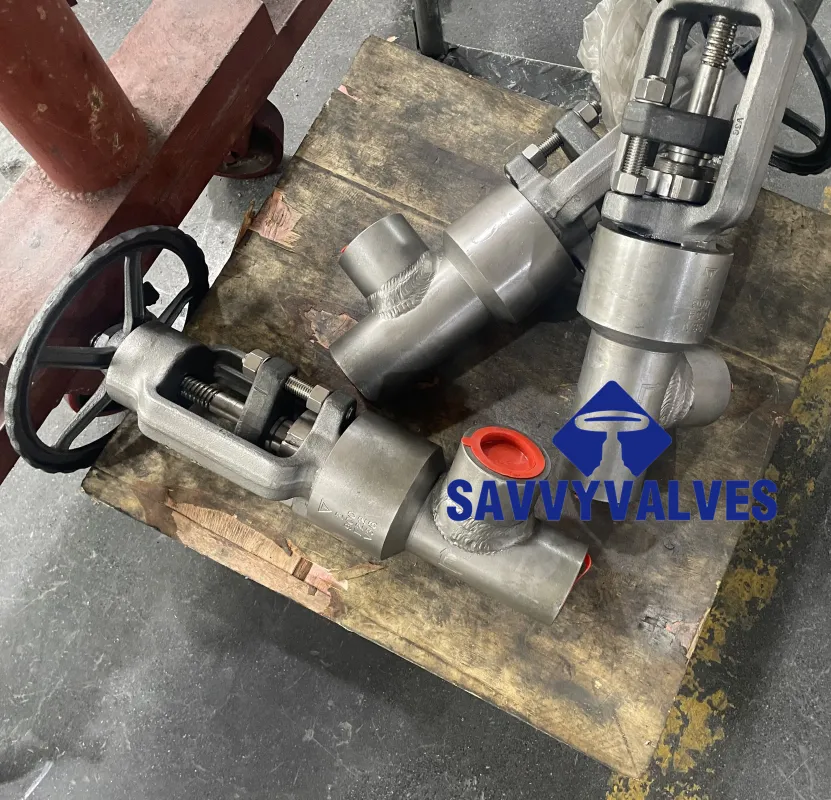
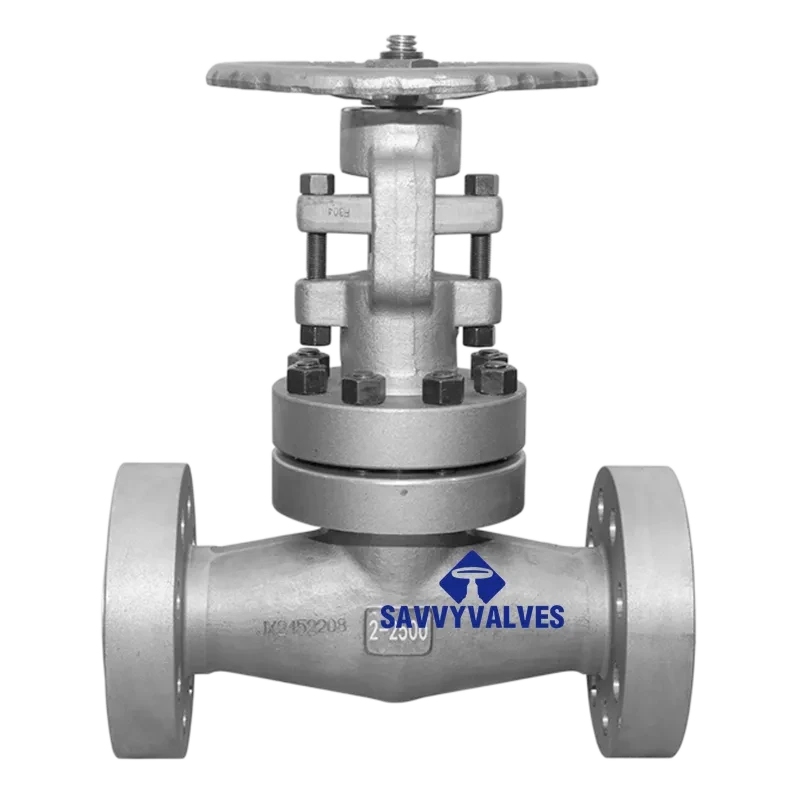
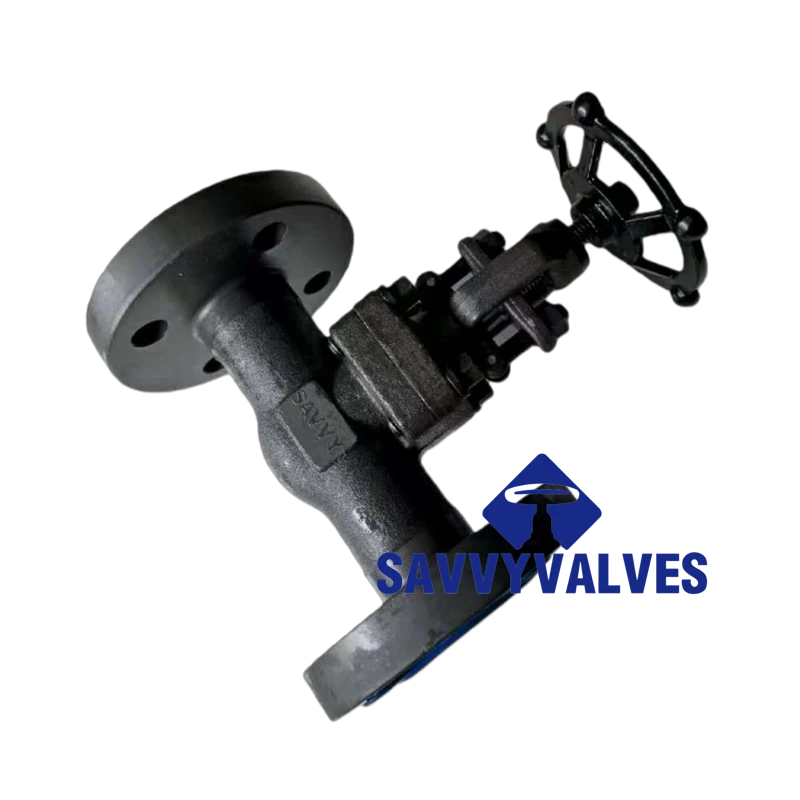
Figure 1: High-integrity forged steel construction typical of a WELDED BODY Y-PATTERN GLOBE VALVE.
Application Scenarios and Target Industries
The inherent strengths of the WELDED BODY Y-PATTERN GLOBE VALVE – superior sealing, reduced pressure drop, and robust construction – make it ideal for a diverse array of demanding industrial applications where reliability and safety cannot be compromised. Its design excels in throttling services while also providing tight shut-off, making it versatile across different operational requirements.
Primary Target Industries:
- Petrochemical and Chemical Processing: Used in distillation columns, reactors, high-pressure steam lines, and for handling corrosive or toxic chemicals where zero leakage to the atmosphere is critical. The welded body prevents fugitive emissions of hazardous media.
- Power Generation (Thermal and Nuclear): Essential for steam systems, feedwater lines, and boiler drain applications, particularly in high-temperature and high-pressure environments (e.g., supercritical steam up to 600°C and 300 bar). Their energy-saving Y-pattern design helps optimize plant efficiency.
- Oil & Gas Exploration and Production: Utilized in upstream, midstream, and downstream operations, including wellhead control, manifold systems, and process lines where crude oil, natural gas, or refined products are transported under varying pressures and temperatures. Often specified for sour service (NACE MR0175 compliance).
- Metallurgy and Steel Manufacturing: For controlling high-temperature gases, cooling water, and other process fluids in furnaces, rolling mills, and related equipment, where robust valves are needed to withstand harsh conditions.
- Water Supply and Drainage (High-Pressure Systems): While less common for general water distribution, they are deployed in specialized high-pressure municipal or industrial water treatment facilities requiring precise flow control and durability, particularly with chemical dosing.
Typical Application Scenarios and Advantages:
- High-Pressure Steam & Condensate Systems:
Advantage: Excellent throttling capability for precise temperature and pressure control, minimal pressure drop compared to straight globe valves contributes to energy saving, and the welded body ensures integrity under thermal cycling, preventing steam leaks. Corrosion resistance with appropriate trim materials (e.g., Stellite hard-faced) ensures long service life despite steam erosion.
- Corrosive Fluid Handling:
Advantage: Manufactured from corrosion-resistant alloys (e.g., Duplex, Hastelloy, Inconel), these valves provide superior protection against aggressive chemicals, while the welded body eliminates traditional gasketed joints which are often weak points for chemical attack and subsequent leakage.
- High-Temperature Hot Oil & Thermal Fluid Systems:
Advantage: The robust, welded construction is inherently stable at elevated temperatures, resisting creep and ensuring leak-free operation. Materials like A182 F22 are commonly used for high-temperature service.
- Feedwater Systems in Power Plants:
Advantage: Provides reliable regulation of feedwater flow, critical for boiler operation. The Y-pattern minimizes cavitation and erosion, extending valve life and maintaining system efficiency.
Technical Advantages and Performance Contrast
The distinct engineering of the WELDED BODY Y-PATTERN GLOBE VALVE confers several significant technical advantages over other valve types, particularly in critical process control applications. These advantages translate directly into operational benefits such as enhanced safety, reduced maintenance, and improved process efficiency.
Key Technical Advantages:
- Superior Leakage Control (Fugitive Emissions): By eliminating the bolted body-bonnet joint, the welded design removes a primary source of potential external leakage. This is crucial for handling hazardous, toxic, or expensive media and for compliance with strict environmental regulations like those concerning volatile organic compounds (VOCs).
- Reduced Pressure Drop and Energy Efficiency: The Y-pattern configuration provides a straighter flow path compared to conventional T-pattern (straight) globe valves. This results in significantly lower pressure drop (typically 20-30% lower Cv values) and reduced turbulence, leading to substantial energy savings in pumping costs, especially for continuous flow applications.
- Enhanced Structural Integrity: The welded body construction provides a monolithic pressure boundary, offering superior resistance to thermal shock, vibration, and pipeline stresses. This makes it exceptionally durable in high-pressure and high-temperature services.
- Excellent Throttling Capability: Globe valves are inherently designed for precise flow regulation. The Y-pattern variant maintains this strength, allowing for accurate control over flow rates without experiencing excessive seat erosion, particularly with properly selected trim materials and disc designs.
- Longer Service Life and Lower Maintenance: The robust construction, combined with reduced erosion from the Y-pattern flow and hard-faced seating surfaces, contributes to an extended service life. The elimination of bonnet gasket maintenance further reduces total cost of ownership (TCO).
- Versatility in Materials: The manufacturing process allows for the use of a wide range of forged materials, from carbon steel to exotic alloys, enabling the valve to be tailored for specific corrosive, abrasive, or high-temperature media.
Performance Contrast: Welded vs. Bolted Bonnet Globe Valves
| Feature | Welded Body Y-Pattern Globe Valve | Bolted Bonnet Globe Valve (Standard) |
|---|---|---|
| Body-Bonnet Joint Integrity | Permanent, full penetration weld; eliminates external leakage. Highly resistant to thermal cycling. | Gasketed joint with bolts; potential for leakage (fugitive emissions) over time, especially under thermal cycling or vibration. Requires gasket maintenance. |
| Fugitive Emissions Risk | Extremely low; ideal for hazardous/toxic media. Often certified to ISO 15848-1. | Higher risk of emissions, especially with aging gaskets or improper bolt tensioning. |
| Pressure Drop (Energy Efficiency) | Significantly lower due to Y-pattern design; contributes to energy savings. | Higher due to more tortuous flow path (straight pattern); increased pumping costs. |
| Maintenance & Serviceability | Bonnet is not removable without cutting; internal parts may be serviced via top entry for some designs, or require in-line welding expertise for full overhaul. Long service life reduces frequency of intervention. | Bonnet is removable for easy access to internal components for maintenance and repair. Requires gasket replacement. |
| Cost Implications | Higher initial cost due to specialized manufacturing and welding. Lower long-term operating costs (TCO) due to energy savings and reduced maintenance/emissions. | Lower initial cost. Higher long-term operating costs due to energy consumption, potential leakage, and periodic gasket replacement. |
| Application Suitability | Critical services: High-pressure, high-temperature, toxic, corrosive, steam, feedwater. Where integrity and emissions are paramount. | General utility services where operating conditions are less severe and frequent maintenance access is preferred. |
The choice between welded and bolted bonnet depends heavily on the specific application requirements, including media, pressure, temperature, safety protocols, and lifecycle cost analysis.
Vendor Comparison and Selection Criteria
Selecting the right manufacturer for a WELDED BODY Y-PATTERN GLOBE VALVE is a strategic decision that impacts the long-term reliability, safety, and operational efficiency of critical industrial processes. Beyond price, B2B decision-makers and engineers must evaluate vendors based on a comprehensive set of criteria reflecting expertise, authoritativeness, and trustworthiness.
Key Vendor Evaluation Factors:
- Certifications and Compliance:
Ensure the vendor holds relevant industry certifications such as ISO 9001 (Quality Management), API Q1 (Oil & Gas Quality), CE Marking (European conformity), PED (Pressure Equipment Directive), and specific product certifications like API 600 or API 624 (for fugitive emissions). These attest to their adherence to international standards and quality control.
- Manufacturing Capabilities and Expertise:
Assess their ability to handle specialized materials (e.g., A182 F91 for creep resistance, Duplex for corrosion), their welding expertise (e.g., ASME Section IX qualified welders and procedures), and their precision machining capabilities. A vendor with in-house forging or extensive experience with complex forgings often indicates higher quality control.
- Testing and Quality Assurance Protocols:
A reputable vendor will have robust in-house testing facilities for hydrostatic, pneumatic, fugitive emission, NDE (RT, UT, MT, PT), and cryogenic tests. Verify their adherence to standards like API 598 or MSS SP-61 for testing procedures.
- Experience and Track Record:
Look for vendors with a proven history of supplying WELDED BODY Y-PATTERN GLOBE VALVE to demanding industries (e.g., 20+ years in operation, list of major partner clients or project references). Longevity in the market and a strong project portfolio are indicators of reliability.
- Customization and Engineering Support:
The ability to provide customized solutions (e.g., specific end connections, special coating, extended bonnets for cryogenic service, specialized actuators) and strong engineering support for application-specific challenges is vital.
- After-Sales Service and Support:
Evaluate their warranty, spare parts availability, technical assistance, and field service capabilities. A global support network is often advantageous for international projects.
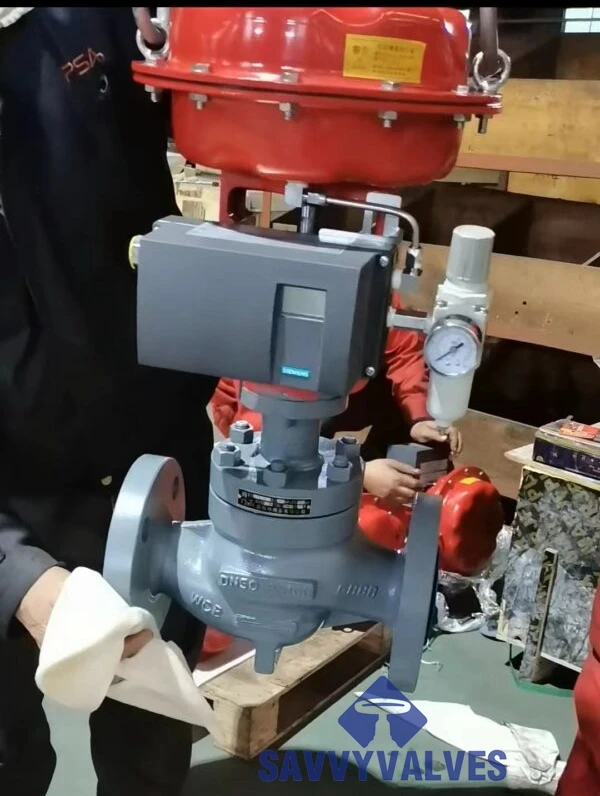
Figure 2: A ruggedly constructed WELDED BODY Y-PATTERN GLOBE VALVE, ready for high-pressure service.
Customized Solutions
Recognizing that standard valve configurations may not always meet the unique demands of every industrial process, manufacturers of the WELDED BODY Y-PATTERN GLOBE VALVE often provide extensive customization options. These tailored solutions ensure optimal performance, extended service life, and seamless integration into existing infrastructure.
Areas of Customization:
- Material Selection: Beyond standard carbon and stainless steels, customization extends to exotic alloys (e.g., Hastelloy, Inconel, Monel, Titanium) for severe corrosive media or high-alloy steels (e.g., ASTM A182 F91, F92) for creep resistance in ultra-high temperature applications. Specific material combinations for body, bonnet, and trim can be engineered for optimal chemical compatibility and mechanical strength.
- Trim Design: Various disc and seat configurations are available:
- Plug Discs: For precise throttling and flow regulation.
- Ball Discs: For tight shut-off applications.
- Parabolic Discs: For enhanced linear flow characteristics.
- Balance Hole Discs: To equalize pressure above and below the disc, reducing operating torque in large valves.
- End Connections: While Butt-weld (BW) is common for welded body valves, options include specialized weld preps, custom flange facings (e.g., raised face, ring type joint, tongue & groove) for specific piping standards, or even socket weld ends for smaller sizes.
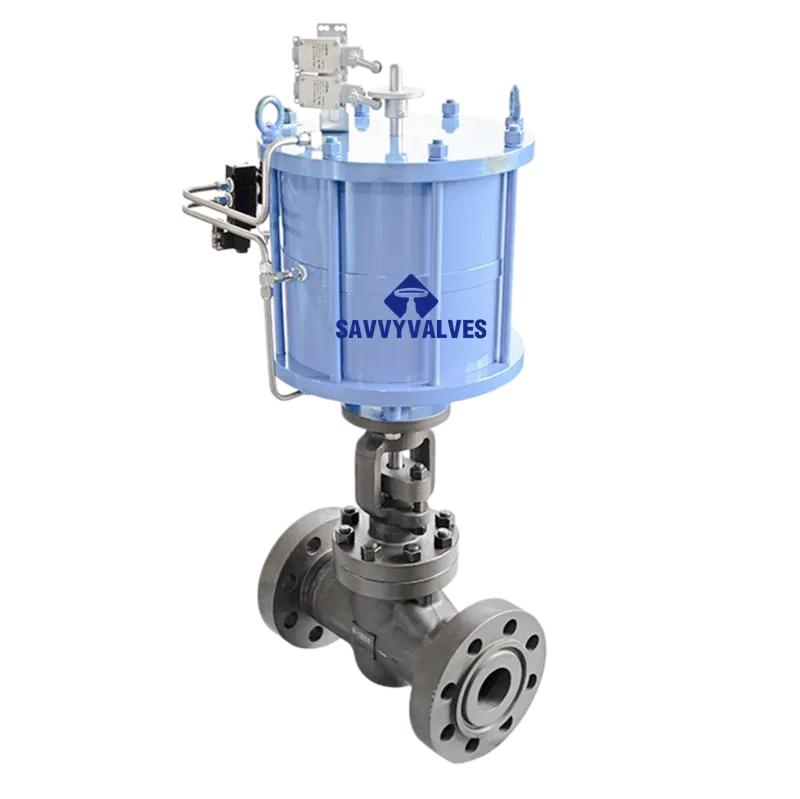
- Actuation and Automation: Valves can be supplied with various actuation types, including manual handwheels, gear operators, pneumatic actuators (double-acting or spring-return), electric actuators (multi-turn or quarter-turn), and hydraulic actuators. These can be integrated with positioners, limit switches, and intelligent control systems for remote operation and process automation.
- Extended Bonnets: For cryogenic service (e.g., LNG, liquid nitrogen), extended bonnets keep the packing gland away from the extremely cold fluid, preventing freezing and ensuring reliable stem sealing.
- By-Pass Arrangements: For larger valves in high-pressure lines, a small by-pass valve can be integrated to equalize pressure across the main valve, facilitating easier opening.
- Special Coatings and Linings: Internal or external coatings for enhanced corrosion resistance (e.g., epoxy, PTFE linings) or for specific service requirements.
- Fugitive Emissions Certification: Specific design and testing to meet ISO 15848-1 or API 622 standards for ultra-low fugitive emissions.
These customization capabilities allow engineers to procure a WELDED BODY Y-PATTERN GLOBE VALVE that is precisely engineered for its intended application, leading to optimized system performance and maximum operational integrity.
Application Case Studies
Real-world implementations highlight the critical role and superior performance of the WELDED BODY Y-PATTERN GLOBE VALVE in challenging industrial environments. These case studies demonstrate its value proposition in terms of reliability, safety, and operational efficiency.
Case Study 1: Supercritical Power Plant Steam Bypass System
Challenge: A new 800 MW supercritical coal-fired power plant required precise and reliable flow control in its main steam bypass system, operating at 250 bar and 580°C. The existing straight-pattern globe valves experienced excessive pressure drop, erosion, and frequent stem packing leaks, leading to significant energy loss and maintenance downtime.
Solution: The plant upgraded to DN300 (NPS 12") WELDED BODY Y-PATTERN GLOBE VALVE, manufactured from ASTM A182 F22 material with Stellite 6 hard-faced trim, and equipped with a pneumatic actuator for rapid response. The welded bonnet design ensured zero fugitive emissions of high-pressure steam.
Outcome: Over a two-year operational period, the new valves demonstrated a 15% reduction in pressure drop across the bypass line, translating into estimated annual energy savings of $150,000. Fugitive emissions were virtually eliminated, improving plant safety and environmental compliance. Customer feedback noted "significantly improved system stability and reduced maintenance intervals due to the robust design."
Case Study 2: Petrochemical Refinery Sour Gas Service
Challenge: An upstream processing unit in a petrochemical refinery dealt with highly corrosive sour gas (H2S content > 5%) at elevated pressures, requiring valves with exceptional corrosion resistance and absolutely no leakage to prevent environmental hazards and personnel exposure. Bolted bonnet valves previously installed had shown gasket deterioration and minor leaks within months.
Solution: The facility implemented NPS 4" Class 900 WELDED BODY Y-PATTERN GLOBE VALVE, specifically designed and tested to NACE MR0175 standards. The body and trim materials were Hastelloy C276, known for its superior resistance to sour gas environments. The valves were also certified to ISO 15848-1 Class BH for fugitive emissions.
Outcome: The Hastelloy welded body valves operated flawlessly for over five years without any detectable external leakage or internal corrosion. The facility achieved full compliance with strict environmental regulations for H2S emissions, significantly enhancing worker safety and avoiding costly penalties. The client remarked, "The welded body design was a game-changer for our sour gas lines, providing peace of mind we hadn't experienced before."
Case Study 3: Industrial Water Treatment Plant Chemical Dosing
Challenge: A large industrial water treatment plant needed precise control of corrosive chemical dosing (e.g., concentrated sulfuric acid) into high-pressure water lines. The existing quarter-turn valves struggled with accurate throttling, leading to inconsistent dosing and wasted chemicals. Furthermore, ensuring long-term integrity against acid attack was crucial.
Solution: The plant installed NPS 2" Class 600 WELDED BODY Y-PATTERN GLOBE VALVE with a body made from Alloy 20 and a PTFE-lined disc for chemical resistance. An intelligent electric actuator was integrated for highly accurate and repeatable dosing control.
Outcome: The Y-pattern globe valves provided the necessary fine-tuning capability, resulting in a 10% optimization of chemical usage due to more accurate dosing. The Alloy 20 welded body construction completely resisted corrosive attack from the sulfuric acid, extending the valve's operational life well beyond previous solutions. The engineering team noted, "The precision control and material integrity of these valves have significantly improved our process efficiency and reduced chemical expenditure."
Trustworthiness and Support
Building trust with B2B clients extends beyond product specifications; it encompasses a commitment to quality, transparency, and comprehensive support. For critical components like the WELDED BODY Y-PATTERN GLOBE VALVE, these elements are paramount.
Frequently Asked Questions (FAQ):
- Q1: Why choose a welded body over a bolted bonnet design?
- A1: Welded body designs eliminate the body-bonnet gasket joint, which is a common leak path, especially in high-pressure, high-temperature, or severe cycling services. This provides superior integrity, reduces fugitive emissions, and minimizes maintenance requirements, making it ideal for critical and hazardous applications.
- Q2: What are the primary benefits of the Y-pattern design?
- A2: The Y-pattern configuration offers a straighter flow path compared to conventional globe valves, resulting in significantly lower pressure drop and reduced turbulence. This leads to improved energy efficiency, less erosion, and extended valve life, especially in high-velocity services.
- Q3: Can these valves be customized for specific media or conditions?
- A3: Absolutely. We offer extensive customization options, including specialized body and trim materials (e.g., Hastelloy, F91), specific end connections, hard-facing for abrasive service, extended bonnets for cryogenic applications, and various actuation packages to meet unique operational requirements.
- Q4: What is the typical lead time for a custom WELDED BODY Y-PATTERN GLOBE VALVE?
- A4: Lead times vary depending on valve size, material complexity, and customization level. Standard configurations typically range from 8-12 weeks, while highly customized or exotic material valves may require 16-24 weeks. We work closely with clients to establish realistic delivery schedules and offer expedited options where feasible.
Lead Time & Fulfillment Details:
Our manufacturing facilities are optimized for efficient production, maintaining strategic inventory levels for common materials and components to expedite delivery. Project timelines are collaboratively established, with regular progress updates provided to ensure transparency and timely fulfillment. Our robust supply chain management ensures raw material availability and adherence to manufacturing schedules. For urgent requirements, expedited production and shipping options can be discussed with our sales team.
Warranty Commitments:
We stand behind the quality and performance of every WELDED BODY Y-PATTERN GLOBE VALVE. All our valves are backed by a comprehensive warranty, typically covering manufacturing defects and material failures for a period of 12-24 months from installation or 18-30 months from shipment, whichever comes first. Specific warranty terms will be provided with each quotation and order confirmation, reflecting our confidence in our engineering and manufacturing excellence.
Customer Support:
Our dedicated customer support team and network of experienced field service engineers are available to provide technical assistance, installation guidance, troubleshooting, and spare parts support. From initial inquiry through the entire operational lifecycle of your WELDED BODY Y-PATTERN GLOBE VALVE, we are committed to ensuring your satisfaction and maximizing the performance of our products in your critical applications. Contact us via phone, email, or through our website's support portal for prompt assistance.
Conclusion
The WELDED BODY Y-PATTERN GLOBE VALVE represents a pinnacle in advanced fluid control technology, specifically engineered to meet the rigorous demands of modern industrial processes. Its unique combination of a low-pressure-drop Y-pattern flow path and a leak-proof welded body construction delivers unparalleled reliability, efficiency, and safety. By minimizing fugitive emissions, reducing energy consumption, and providing precise throttling capabilities in extreme conditions, this valve stands as an indispensable asset for industries ranging from power generation and petrochemicals to specialized chemical processing. Investing in such high-integrity valves is not merely a procurement decision but a strategic move towards enhancing operational longevity, environmental compliance, and overall process optimization, ultimately safeguarding assets and personnel while ensuring sustained productivity.
Citations
- American Society of Mechanical Engineers (ASME). ASME B16.34-2020: Valves—Flanged, Threaded, and Welding End.
- American Petroleum Institute (API). API 600: Gate, Globe, and Check Valves for Pipeline Transportation Systems.
- International Organization for Standardization (ISO). ISO 15848-1: Industrial valves – Measurement, test and qualification procedures for fugitive emissions – Part 1: Classification system and qualification procedures for type testing of valves.
- Manufacturers Standardization Society (MSS). MSS SP-61: Pressure Testing of Valves.
- National Association of Corrosion Engineers (NACE). NACE MR0175/ISO 15156: Petroleum and natural gas industries—Materials for use in H2S-containing environments in oil and gas production.
- Crane Co. Flow of Fluids Through Valves, Fittings, and Pipe. Technical Paper No. 410.


 English
  Arabic
  Azerbaijani
  Czech
Czech  Dutch
Dutch  French
  German
  Indonesian
  Italian
  Japanese
  Korean
  Malay
Malay  Persian
  Polish
  Portuguese
  Russian
  Spanish
  Thai
Thai  Vietnamese