To be honest, the whole industry is buzzing about IoT integration now. Everything’s gotta be ‘smart,’ right? Globe valve manufacturers are scrambling to add sensors, remote control... It’s a bit much, if you ask me. I’ve been on sites where they spend more time wrestling with the software than actually controlling the flow. But that’s the direction things are going, anyway.
Have you noticed how many guys get tripped up on the seat design? Everyone thinks they can reinvent the wheel, but a poorly designed seat will cause erosion faster than you can say ‘pressure drop’. I encountered this at a factory in Tianjin last time, they were so proud of their ‘optimized’ seat, and it failed in a week. Turns out, they hadn’t accounted for the abrasive nature of the fluid. It’s always the little things.
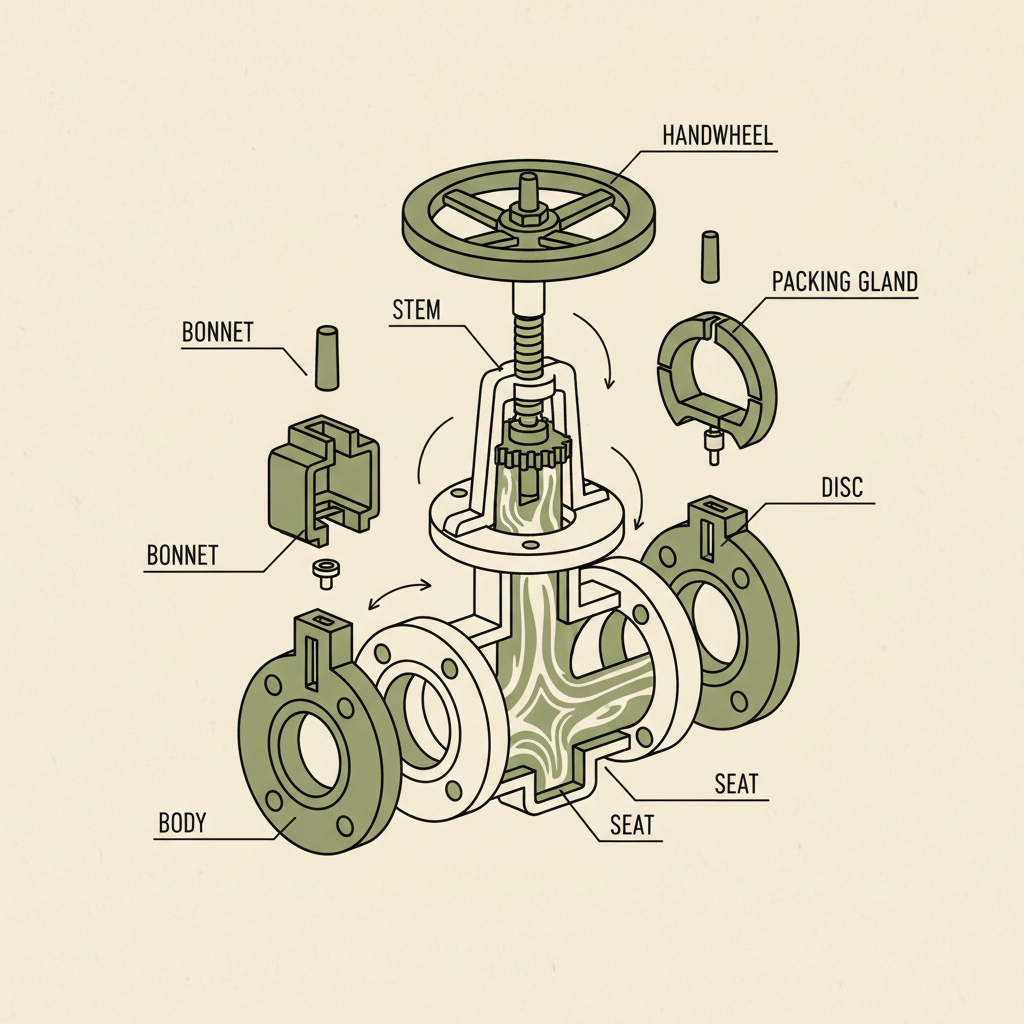
We primarily use ASTM A105 carbon steel for the body – feels solid, you know? Gets a bit greasy when you handle it, that’s how you know it’s good. For trim, we stick with stainless steel 316. It smells… well, it doesn’t really smell, but it feels different, smoother. Less grit. Important when you’re dealing with corrosive fluids. Then there’s the graphite packing. That stuff gets everywhere. Seriously, it's like black snow.
The Current Landscape of Globe Valve Manufacturing
Strangely enough, the biggest push we’re seeing isn’t necessarily better valves, it's faster delivery. Everyone wants it yesterday. Globe valve manufacturers are under constant pressure to reduce lead times without sacrificing quality. It’s a tightrope walk, let me tell you.
The demand is primarily driven by infrastructure projects in developing nations and the retrofitting of older systems in established markets. Places like Southeast Asia and parts of Africa are booming, and they need reliable flow control. Meanwhile, refineries and power plants in Europe and North America are constantly updating their equipment.
Common Design Pitfalls in Globe Valve Creation
I keep telling the young engineers, “Keep it simple!” But they all think they need to add some fancy feature. The biggest mistake I see is over-engineering the internal components. Complicated designs mean more potential failure points. A simple, robust design will always outperform a complex, fragile one.
Another issue is neglecting the proper sizing of the valve for the application. Undersized valves cause excessive pressure drop and erosion, while oversized valves can lead to cavitation. It seems basic, but you'd be surprised how often it happens. People just grab a valve off the shelf without doing the calculations.
And don’t even get me started on the bonnet gasket selection. Get that wrong, and you've got a leak waiting to happen. You gotta match the gasket material to the fluid and the temperature.
Material Selection: A Hands-On Perspective
As I said before, A105 carbon steel for the body is the workhorse. It's affordable, readily available, and strong enough for most applications. But you gotta inspect it carefully for flaws, especially if it’s coming from overseas. I’ve seen some steel that felt…off. You can't put your finger on it, but it just doesn't feel right.
For the internal components exposed to corrosive fluids, 316 stainless steel is the go-to. It’s more expensive than carbon steel, but it’s worth it for the longevity. Sometimes, for really harsh environments, we’ll use Alloy 20. That stuff is pricey, but it can handle almost anything. It's also a pain to machine, by the way.
The packing material is another critical area. Graphite is standard, but you need to choose the right grade. Some graphite packings are too soft and will compress quickly, leading to leaks. Others are too hard and will damage the valve stem. It's a balancing act.
Real-World Testing Procedures for Globe Valves
Forget about those pristine lab tests. Real testing happens on-site, under actual operating conditions. We typically do hydrostatic testing, of course, to verify the integrity of the valve body. But that’s just the beginning.
We also do cycle testing, repeatedly opening and closing the valve to simulate years of use. But honestly, the most informative tests are the ones where we install the valves in a real process and monitor their performance over time. We watch for leaks, pressure drops, and any signs of wear.
Globe Valve Manufacturer Performance Metrics
How Globe Valves are Actually Used in the Field
You know, people don't always use things the way you think they will. We design these valves for precise flow control, but sometimes they just get fully opened or fully closed and left that way for months. It's frustrating, but it happens.
They’re commonly used in steam tracing applications to keep pipes from freezing, in cooling water systems for temperature control, and in chemical processing plants to regulate the flow of corrosive fluids. The guys on site often use them as quick shut-off valves when they're doing maintenance on a line. Not ideal, but practical.
Advantages and Disadvantages of Globe Valves
The biggest advantage, hands down, is the precise throttling capability. You can fine-tune the flow rate with a globe valve like no other. They’re also relatively simple to maintain. But they do create a significant pressure drop, which can be a problem in some applications. And they're not ideal for high-flow applications.
Another disadvantage is they can be prone to cavitation if not sized correctly. You hear that whistling sound, and you know you’ve got a problem. It’ll eat the valve up from the inside. It’s a pain.
Anyway, I think they are more versatile than gate or ball valves in many cases, offering a good balance between control and simplicity.
Customization Options for Globe Valve Manufacturers
We get a lot of requests for customization. Last month, that small boss in Shenzhen who makes smart home devices insisted on changing the interface to – said it was “more modern.” It was a nightmare. Had to redesign the entire actuator mounting. The result? It cost him a fortune and delayed his product launch by three months.
Generally, we can customize the materials, the trim, the connections, and the actuator. We can also add features like positioners, limit switches, and solenoid operators. But the more customization you add, the more expensive and complex it gets.
We did one job where the customer needed a valve that could handle extremely high temperatures and pressures. We had to use a special alloy and a custom-designed gasket. It was a challenge, but we delivered.
Summary of Globe Valve Customization Considerations
| Customization Aspect |
Complexity Level |
Cost Impact |
Lead Time Increase |
| Material Change (e.g., Alloy 20) |
Medium |
High |
2-4 weeks |
| Connection Type Modification |
Low |
Medium |
1-2 weeks |
| Actuator Addition/Change |
Medium |
Medium-High |
2-3 weeks |
| Custom Gasket Design |
High |
Very High |
4-6 weeks |
| Surface Treatment (e.g., Coating) |
Low |
Low |
1 week |
| Internal Component Redesign |
Very High |
Extremely High |
8+ weeks |
FAQS
It really depends on the fluid composition and the maintenance schedule, but generally, you're looking at 5-10 years. If they're constantly exposed to abrasive materials, it'll be closer to 5. Regular inspection and packing replacement are crucial. We've seen some last 15 years with meticulous care, but that's rare.
Yes, but you need to choose the right materials and design. A carbon steel body with stainless steel trim is a common choice. The packing gland is also critical – it needs to withstand the high temperatures and pressures without leaking. We've done installations up to 800°F with no issues, but anything beyond that requires specialized alloys.
Globe valves are for throttling flow, meaning you can adjust the flow rate. Gate valves are primarily for on/off service. Globe valves create more pressure drop, but offer finer control. Gate valves have less pressure drop but aren't good for frequent operation. Choose the valve based on the application's needs.
Cv is incredibly important. It tells you how much flow a valve can handle at a given pressure drop. If the Cv is too low, you’ll restrict the flow and cause problems. If it’s too high, you might not be able to control the flow effectively. It’s essential to calculate the Cv needed for your application.
Regular packing adjustment is key to prevent leaks. Inspect the valve body for corrosion and erosion. Lubricate the stem periodically. And always check for any unusual noises or vibrations that could indicate a problem. Preventative maintenance will save you a lot of headaches down the road.
Absolutely. We offer a range of actuators, pneumatic, electric, and hydraulic, that can be fitted to our globe valves. Automation is great for remote control and precise flow regulation. But remember, the actuator needs to be properly sized and configured for the valve and the application.
Conclusion
Ultimately, globe valve manufacturers are facing a complex landscape of evolving demands, stringent regulations, and constant pressure to innovate. Choosing the right valve involves a careful consideration of materials, design, and application requirements. It’s about finding the right balance between performance, reliability, and cost.
But in the end, whether this thing works or not, the worker will know the moment he tightens the screw. That’s what I always tell the engineers. They can spend all day running simulations and doing calculations, but the real test is in the field, in the hands of the guys who are actually using the valves every day. If they're happy, we've done our job. Visit our website: www.savvyvalvetech.com








 English
  Arabic
  Azerbaijani
  Czech
Czech  Dutch
Dutch  French
  German
  Indonesian
  Italian
  Japanese
  Korean
  Malay
Malay  Persian
  Polish
  Portuguese
  Russian
  Spanish
  Thai
Thai  Vietnamese