
Kulové kohouty
-
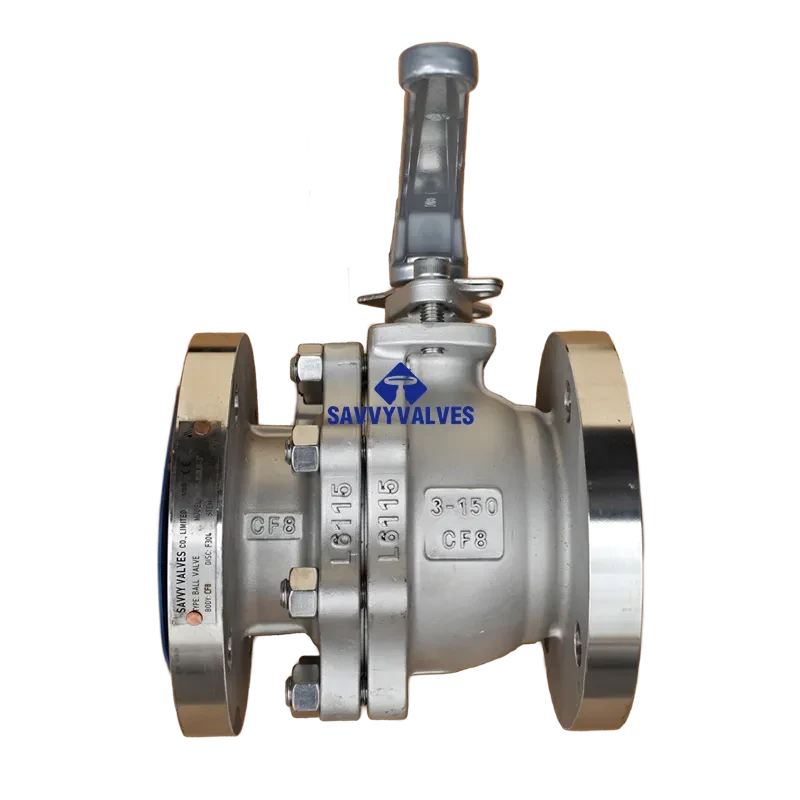 Product Name Stainless Steel Flanged Floating Ball Valve
Nominal Size 3″ (DN80)
Pressure Rating Class 150LB
Body Material 304 Stainless Steel (ASTM A351 CF8 / SS304)
End Connection Flanged
Construction Floating ball, two-piece / side-entry
Bore Type Full bore (full port)
Seat Seal Type Soft seated (PTFE / RPTFE / PPL)
Fire Safe Design Optional, to API 607
-
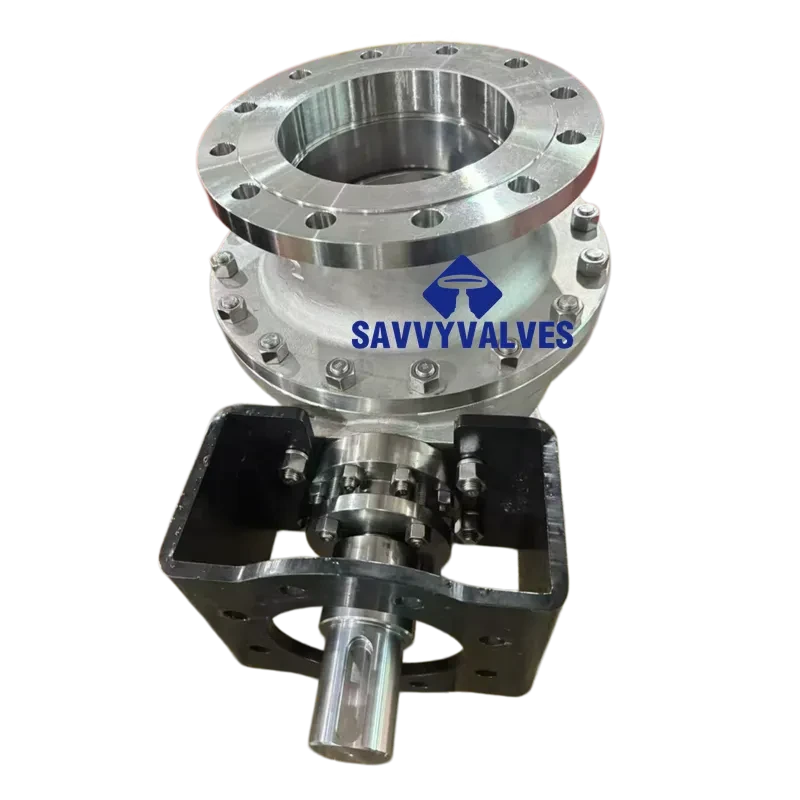 Nominal Diameter (DN) DN50 ~ DN1200 (NPS 2″ ~ 48″)
Nominal Pressure (PN) PN16 ~ PN420 (Class 150 ~ Class 2500)
ASME Class 150, 300, 600, 900, 1500, 2500
Connection Type Flanged (RF/RTJ), Butt weld
Ball Rotation 0° ~ 90° (adjustable)
Flow Characteristic Approx. equal percentage / linear
Rangeability 250:1 ~ 300:1
Seat Leakage (Soft) Zero / Class VI
Seat Leakage (Metal) Class IV ~ V (optional Class VI for metal)
Operating Torque 30% ~ 50% lower than floating ball design
A ball valve is a type of quarter-turn valve that controls flow using a hollow, perforated, and pivoting ball inside the valve body. When the ball’s hole is aligned with the pipeline, fluid flows freely; when rotated 90 degrees, the flow is completely blocked. This simple mechanism makes ball valves highly reliable for shutoff and control applications. Ball valves are known for their tight sealing performance, durability, and ease of operation. They can handle high pressure and temperature conditions, and are suitable for gas, liquid, or even corrosive media, depending on the materials used. With minimal pressure drop and fast on-off control, ball valves are widely used in industries like oil and gas, water treatment, chemical processing, and general plumbing. They come in various types such as two-way, three-way, floating, and trunnion-mounted, and can be operated manually, pneumatically, or electrically.


 Czech
Czech  English
  Arabic
  Azerbaijani
  Dutch
Dutch  French
  German
  Indonesian
  Italian
  Japanese
  Korean
  Malay
Malay  Persian
  Polish
  Portuguese
  Russian
  Spanish
  Thai
Thai  Vietnamese